Home / Weight Loss / Retatrutide Dosage
Post Content
Post Contents
Follow Us

Retatrutide Dosage

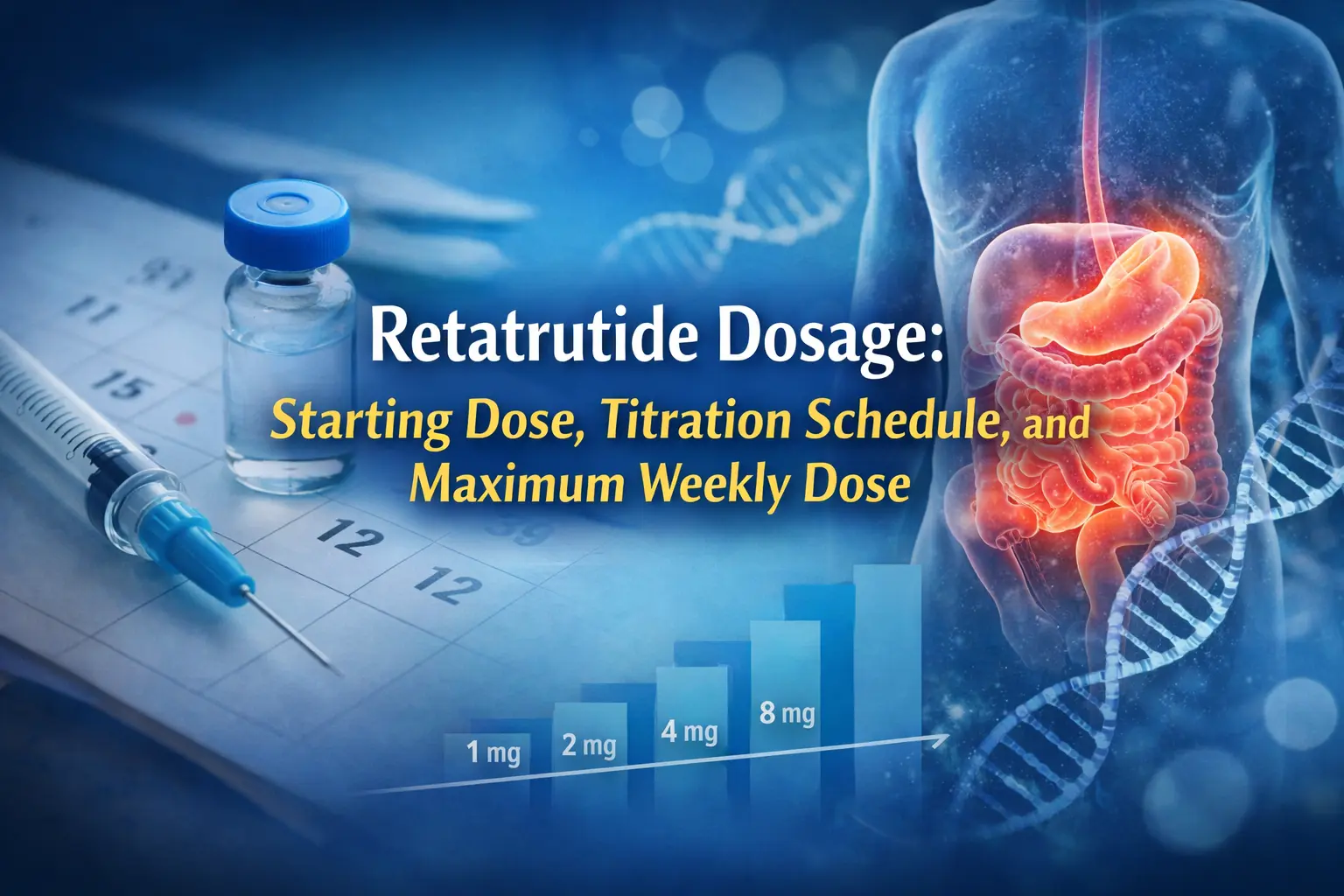
Horizontal medical-themed image featuring a GLP-1 style injection pen and dosage chart with overlaid text reading “Retatrutide Dosage: Starting Dose, Titration Schedule, and Maximum Weekly Dose”.
Post Contents

Understanding the correct retatrutide dosage is an important part of achieving safe, consistent weight loss results.

Like many metabolic therapies, dosing typically begins low and increases gradually over time to improve tolerability and support long-term progress.

Retatrutide has been studied for its effects on appetite regulation, metabolic function, and weight management.

Because responses can vary, dosing schedules are typically individualized based on patient needs and clinical guidance.


SEE HOW RETATRUTIDE CAN HELP YOUR WEIGHT LOSS JOURNEY


Retatrutide Dosage Quick Answer


Typical retatrutide dosage begins at 1 mg once weekly, with gradual increases approximately every 4 weeks.

Clinical research has evaluated doses up to 12 mg per week, depending on individual tolerance and treatment goals.


What Is Retatrutide?


Retatrutide is part of a newer class of metabolic therapies designed to influence hormones involved in appetite control, blood sugar regulation, and energy balance.

It works by activating receptors associated with:

  • appetite signaling
  • glucose metabolism
  • calorie utilization
  • metabolic efficiency

Because it targets multiple metabolic pathways, retatrutide has been studied for its ability to support meaningful changes in body weight and overall metabolic health.


Retatrutide Dosage Overview


Most dosing protocols follow a gradual increase schedule to help the body adjust comfortably.

Typical characteristics of retatrutide dosing include:

  • once weekly injection
  • gradual dose escalation
  • individualized progression
  • consistent weekly timing

Increasing the dose slowly helps improve tolerance and supports steady progress over time.


Retatrutide Dosage Chart


Below is a commonly referenced titration structure used in clinical research settings.

Treatment Phase Weekly Dose
Weeks 1–4 1 mg
Weeks 5–8 2 mg
Weeks 9–12 4 mg
Weeks 13–16 6 mg
Weeks 17–20 8 mg
Weeks 21+ 10 mg – 12 mg

Not every individual progresses to the highest dose.

Some remain at lower doses depending on response and tolerance.


Retatrutide Dosage Schedule by Week


Dosing typically increases gradually over time to help the body adapt.

A general weekly progression may look like:

Weeks 1–4: introductory dose
Weeks 5–8: first increase
Weeks 9–12: moderate dose range
Weeks 13–16: continued gradual increase
Weeks 17–20: higher therapeutic range
Week 21 onward: maintenance dose based on response

Some individuals remain at moderate dose levels long-term if results are achieved without needing further increases.


Typical Retatrutide Titration Schedule


Titration refers to gradually increasing dosage at planned intervals.

Many protocols increase the weekly dose approximately every four weeks.

Gradual adjustments may help:

  • reduce nausea or digestive discomfort
  • improve medication tolerance
  • support consistent progress
  • allow individualized dose optimization

Increasing too quickly may increase the likelihood of digestive symptoms, which is why gradual progression is commonly recommended.


Starting Dose of Retatrutide


The most commonly referenced starting dose is 1 mg once weekly, although individual recommendations may vary.

Beginning with a lower dose allows the body to adjust to changes affecting appetite and digestion.

This helps improve comfort during early treatment phases.

A lower starting dose may also help patients maintain consistency while progressing gradually.


Maximum Retatrutide Dose Studied


Clinical research has evaluated doses up to 12 mg per week.

Higher doses have been associated with stronger metabolic effects in research settings, although the ideal dose differs between individuals.

Some individuals achieve meaningful results at moderate dose levels without needing to increase further.

Dose adjustments are typically based on response, tolerance, and overall treatment goals.


How Often Is Retatrutide Taken?


Retatrutide is typically administered once per week, ideally on the same day each week.

Maintaining a consistent weekly schedule helps support steady hormone signaling and predictable progress.

Consistency is an important factor in achieving optimal results.


Retatrutide Dose for Weight Management


Research suggests a relationship between dosage level and overall response.

Higher doses tend to produce stronger effects on appetite regulation and metabolic activity, although individual outcomes vary.

Results may depend on factors such as:

  • consistency with dosing schedule
  • nutrition habits
  • physical activity levels
  • sleep patterns
  • metabolic health markers
  • individualized treatment approach

Gradual increases allow individuals to balance effectiveness with comfort.


Retatrutide vs Other Metabolic Therapy Dosages


Many individuals compare dosage ranges across metabolic therapies.

Therapy Type Typical Weekly Dose Range Receptor Activity
GLP-1 based therapy up to 2.4 mg GLP-1 receptor
Dual agonist therapy up to 15 mg GLP-1 + GIP receptors
Triple agonist therapy up to 12 mg GLP-1 + GIP + glucagon receptors

Different therapies interact with the body in unique ways, which can influence dosage structure and individual response.

Milligram comparisons do not always reflect equivalent potency because each therapy activates receptors differently.


How Long It Takes to Reach a Maintenance Dose


Because dosing increases gradually, it may take several months to reach a higher weekly dose.

Many titration schedules span approximately:

  • 12 to 20 weeks for gradual progression
  • longer timelines when slower adjustments are preferred

Some individuals remain at moderate dose levels long term if desired outcomes are achieved.


When Retatrutide Dosage May Be Adjusted


Dose adjustments may occur based on individual response and comfort level.

A provider may recommend:

  • maintaining a current dose longer before increasing
  • slowing titration if digestive symptoms occur
  • remaining at a lower effective dose
  • adjusting timing of increases
  • pausing increases until tolerance improves

Individualized adjustments help support a comfortable and sustainable approach.


Factors That Can Influence Retatrutide Dosage


Dosage planning often considers personal health factors and treatment goals.

Common considerations include:

  • starting body composition
  • metabolic markers
  • appetite response
  • digestive sensitivity
  • weight management goals
  • overall tolerance to therapy

Personalized adjustments help ensure dosing remains appropriate.


Retatrutide Dosage Safety Considerations


Some individuals may experience temporary digestive symptoms when increasing dosage.

Common experiences during dose adjustments may include:

  • mild nausea
  • decreased appetite
  • feeling full sooner
  • temporary fatigue
  • digestive changes

Gradual titration helps minimize discomfort and allows the body time to adapt.

Monitoring progress helps ensure dosing remains appropriate for each individual.


Personalized Metabolic Treatment Planning


A structured dosing strategy allows treatment to be tailored based on individual response, comfort level, and goals.

Careful adjustments help support consistency while minimizing unwanted effects, allowing individuals to progress at a pace that feels manageable.


CONTACT US


Retatrutide Dosage Summary


Retatrutide dosing typically begins with a low weekly dose that increases gradually over time.

Key points to remember:

  • once weekly dosing schedule
  • gradual increases approximately every 4 weeks
  • maximum studied dose of 12 mg weekly
  • individualized dosing based on response
  • steady progression supports consistency

Understanding how retatrutide dosage works can help individuals feel more confident when exploring metabolic health and weight loss strategies.


SCHEDULE A CONSULTATION


FAQs: Retatrutide Dosage


What is the starting dose of retatrutide?


The most commonly referenced starting dose of retatrutide is 1 mg once per week. Beginning with a lower dose allows the body to adjust gradually and helps minimize digestive discomfort as treatment begins.


What is the typical retatrutide dosing schedule?


Retatrutide is typically taken once weekly, with the dose gradually increased every 4 weeks. This gradual titration allows the body to adapt and helps improve overall tolerability.


How quickly is retatrutide dosage increased?


Dosage increases are usually spaced about every four weeks. This gradual progression helps reduce the likelihood of digestive side effects and supports a more comfortable treatment experience.


Can retatrutide dosage be adjusted?


Yes, dosing may be adjusted based on individual response, tolerance, and treatment goals. Some individuals may increase more slowly, pause dose increases, or remain at a lower effective dose.


How often do you take retatrutide?


Retatrutide is typically administered once per week, ideally on the same day each week to maintain consistent metabolic signaling.


Why is retatrutide dosage increased gradually?


Gradual titration helps the body adapt to changes in appetite and digestion. Increasing slowly can reduce side effects such as nausea and help support long-term consistency.

Not Sure Where to Start?

Lorem ipsum dolor sit amet consectetur. Et ultrices nunc donec placerat. In velit mattis ac arcu vitae tortor ullamcorper.

keep learning

Lorem ipsum dolor sit amet consectetur. Et ultrices nunc donec placerat.

Medical-themed horizontal banner showing a healthcare professional reviewing treatment options with a patient, symbolizing access and eligibility for retatrutide peptide therapy.

Retatrutide is generating significant interest as a next-generation peptide for weight loss and metabolic health.

Because it targets multiple hormonal pathways involved in appetite, blood sugar regulation, and energy balance, many people are actively searching for information on how to get retatrutide, who may qualify, and what options currently exist.

Understanding how access works, what factors determine eligibility, and how providers approach peptide therapy can help you make informed decisions about your health.


SEE HOW RETATRUTIDE CAN HELP YOU


How to Get Retatrutide (Quick Answer)


Most individuals explore retatrutide through medical providers who specialize in metabolic health, peptide therapy, and medical weight management.

The process typically involves a consultation, health screening, and a personalized treatment plan designed to support long-term metabolic goals.

Because every person’s health profile is different, working with an experienced provider helps ensure the approach is tailored to your individual needs.


What Is Retatrutide?


Retatrutide is a peptide therapy with potential effects on:

  • weight loss
  • metabolic health
  • insulin sensitivity
  • appetite regulation
  • energy balance

It is often described as a triple agonist peptide because it interacts with three hormone receptors involved in metabolism:

  • GLP-1
  • GIP
  • glucagon

These pathways play an important role in hunger signaling, calorie utilization, and blood sugar control.

Because of this multi-pathway approach, retatrutide has attracted attention among individuals looking for advanced options to support long-term weight management goals.


How Does Retatrutide Work?


Retatrutide works by interacting with hormones that influence appetite, metabolism, and energy usage.

These hormone pathways help regulate:

  • how full you feel after eating
  • how efficiently your body uses energy
  • blood sugar balance
  • hunger signals
  • fat metabolism

By targeting multiple metabolic pathways simultaneously, peptide therapies like retatrutide are being explored as part of comprehensive medical weight management programs.


Can a Doctor Prescribe Retatrutide?


Individuals interested in peptide therapy typically begin by consulting a qualified provider experienced in metabolic health and hormone optimization.

A provider will evaluate:

  • medical history
  • metabolic markers
  • weight management goals
  • current medications
  • lifestyle factors

Based on this evaluation, providers can determine which therapies align best with your health needs.


How Do You Qualify for Retatrutide?


Eligibility for peptide therapy varies from person to person.

Providers typically consider several factors when determining whether a treatment plan is appropriate.

Common considerations include:

  • difficulty losing weight despite diet and exercise
  • metabolic resistance
  • blood sugar imbalances
  • appetite regulation challenges
  • desire for medically guided weight management
  • interest in structured metabolic support

Lab testing may also be recommended to evaluate markers related to metabolic health.

Because treatment decisions are individualized, recommendations are based on a full picture of your health rather than one single factor.


Where People Typically Look for Retatrutide


Individuals researching retatrutide often explore several pathways when learning about emerging peptide therapies.


Medical providers specializing in metabolic health


Clinics focused on metabolic optimization, hormone health, and weight management often provide guidance on peptide therapy options.


Medical weight management programs


Programs designed to support long-term metabolic health typically use personalized strategies based on each patient’s needs.


Research-based treatment pathways


Some individuals explore structured programs that focus on metabolic and peptide-based therapies.

Working with a qualified provider helps ensure your care is guided by medical expertise and appropriate monitoring.


Why Retatrutide Is Generating Interest


Retatrutide is being studied because of its potential to influence several important biological mechanisms involved in metabolism.

Potential areas of interest include:


Appetite regulation


Hormonal pathways involved in satiety may influence hunger patterns.


Metabolic efficiency


Peptide therapies are often explored for their ability to support metabolic function.


Blood sugar balance


Hormonal signaling pathways involved in glucose metabolism may contribute to stable energy levels.


Weight management support


Some individuals explore peptide therapies as part of a comprehensive medical weight management strategy.

Because metabolic health is complex, providers often use a multifaceted approach that may include nutrition guidance, lifestyle adjustments, and medical support.


Retatrutide Compared to Other Metabolic Peptides


Retatrutide is part of a broader category of peptides studied for metabolic support.

Other therapies may focus on:

  • appetite control
  • insulin sensitivity
  • energy metabolism
  • hormonal balance
  • body composition support

Each therapy works differently, which is why personalized guidance is important when considering metabolic treatments.


How Retatrutide Treatment Plans Are Typically Structured


When peptide therapy is included in a care plan, providers typically follow a structured process designed to support safety and effectiveness.

Treatment plans may include:


  • Initial consultation: Your provider reviews your symptoms, medical history, and goals.
  • Comprehensive lab testing: Lab work helps identify metabolic markers that influence treatment decisions.
  • Personalized therapy strategy: Your provider develops a customized plan based on your health profile.
  • Ongoing progress monitoring: Regular check-ins allow adjustments based on your response.
  • Long-term metabolic support: Lifestyle factors such as nutrition, sleep, and activity levels may also be addressed.

This structured approach helps ensure treatment remains aligned with your evolving health needs.


Why Medical Guidance Matters When Seeking Retatrutide


Peptide therapies should be approached with professional oversight to help ensure safe and appropriate use.

Medical supervision helps:

  • evaluate potential suitability
  • monitor progress
  • adjust treatment strategies
  • identify potential side effects early
  • support sustainable outcomes

Working with an experienced provider helps ensure decisions are based on clinical insight rather than guesswork.


Factors That Influence Treatment Decisions


Providers consider several factors when evaluating peptide therapy options.

  • Medical history: Existing health conditions may influence treatment planning.
  • Current medications: Medication interactions may impact recommendations.
  • Metabolic health markers: Blood work provides insight into insulin sensitivity and metabolic function.
  • Lifestyle patterns: Sleep, stress, activity levels, and nutrition habits all influence results.

Because metabolic health involves multiple variables, treatment plans are tailored rather than standardized.


What to Expect When Exploring Peptide Therapy


Individuals interested in metabolic peptide therapies often follow a structured process.

Typical steps include:

  • consultation with a qualified provider
  • health history review
  • lab testing
  • personalized treatment planning
  • progress monitoring
  • adjustments when needed

A guided process helps ensure your care remains personalized and responsive to your progress.


How Amari Health Supports Patients Exploring Peptide Therapy


Amari Health focuses on individualized care designed to support metabolic health, weight loss, and overall wellness.

Your care plan may include:

  • comprehensive evaluation
  • personalized metabolic strategy
  • provider-guided treatment planning
  • ongoing progress tracking
  • adjustments based on your response

A structured medical approach can help provide clarity and confidence when exploring peptide therapies.


CONTACT US


Key Takeaways: How to Get Retatrutide


People searching for how to get retatrutide are often looking for medically guided options that support long-term metabolic health.

Working with a qualified provider helps ensure:

  • treatment decisions are personalized
  • health factors are carefully evaluated
  • progress is monitored appropriately
  • care aligns with your goals
  • metabolic support is structured and sustainable

Because each person’s health profile is unique, individualized medical guidance plays an important role in determining the most appropriate path forward.


SCHEDULE A CONSULTATION


FAQs: How to Get Retatrutide


How do you get retatrutide?


Most individuals explore retatrutide through a medical provider specializing in metabolic health or peptide therapy. The process typically begins with a consultation where your provider reviews your health history, symptoms, and goals. Lab testing may also be recommended to evaluate metabolic markers before developing a personalized treatment plan.


Is a prescription required for retatrutide?


Peptide therapies are typically managed under medical supervision to ensure appropriate use and monitoring. Providers evaluate each individual’s health profile before recommending a treatment strategy. Working with a qualified provider helps ensure therapy is guided safely and effectively.


How long does retatrutide take to work?


Response time varies depending on individual metabolic factors, lifestyle habits, and overall health status. Some individuals notice changes in appetite or energy levels relatively early, while broader metabolic changes may develop gradually as part of a structured care plan. Regular monitoring allows providers to adjust treatment strategies when appropriate.


How much weight can you lose on retatrutide?


Studies show weight management outcomes vary depending on individual health factors, adherence to lifestyle recommendations, and treatment approach. Because metabolic health is influenced by multiple variables, results differ from person to person. Providers typically focus on sustainable progress that supports long-term health improvements.


What are the benefits of retatrutide?


Retatrutide is being studied for its potential role in supporting appetite regulation, metabolic efficiency, blood sugar balance, and weight management. Peptide therapies are often explored as part of a comprehensive health strategy that may also include nutrition guidance, activity recommendations, and ongoing medical support. A personalized approach helps ensure treatment aligns with your overall wellness goals.

Watch Our Workshop Video

Fill out the form below to get instant access to our full workshop video. Discover valuable insights and strategies that you can start applying right away!

Name(Required)

Is Bio-Identical HRT Safe for Women?

Concerns around hormone therapy largely stem from the Women’s Health Initiative (WHI) study conducted over two decades ago. However, it’s important to note that the WHI studied synthetic, non-human hormones—specifically horse-derived hormones which were later shown to have harmful effects.

Since then, a growing body of research on bio-identical hormones—which are structurally identical to those naturally produced by the human body—has found no increased risk of chronic disease. These safer, plant-derived hormones have become a trusted, evidence-based option for women seeking to restore balance and relieve symptoms.