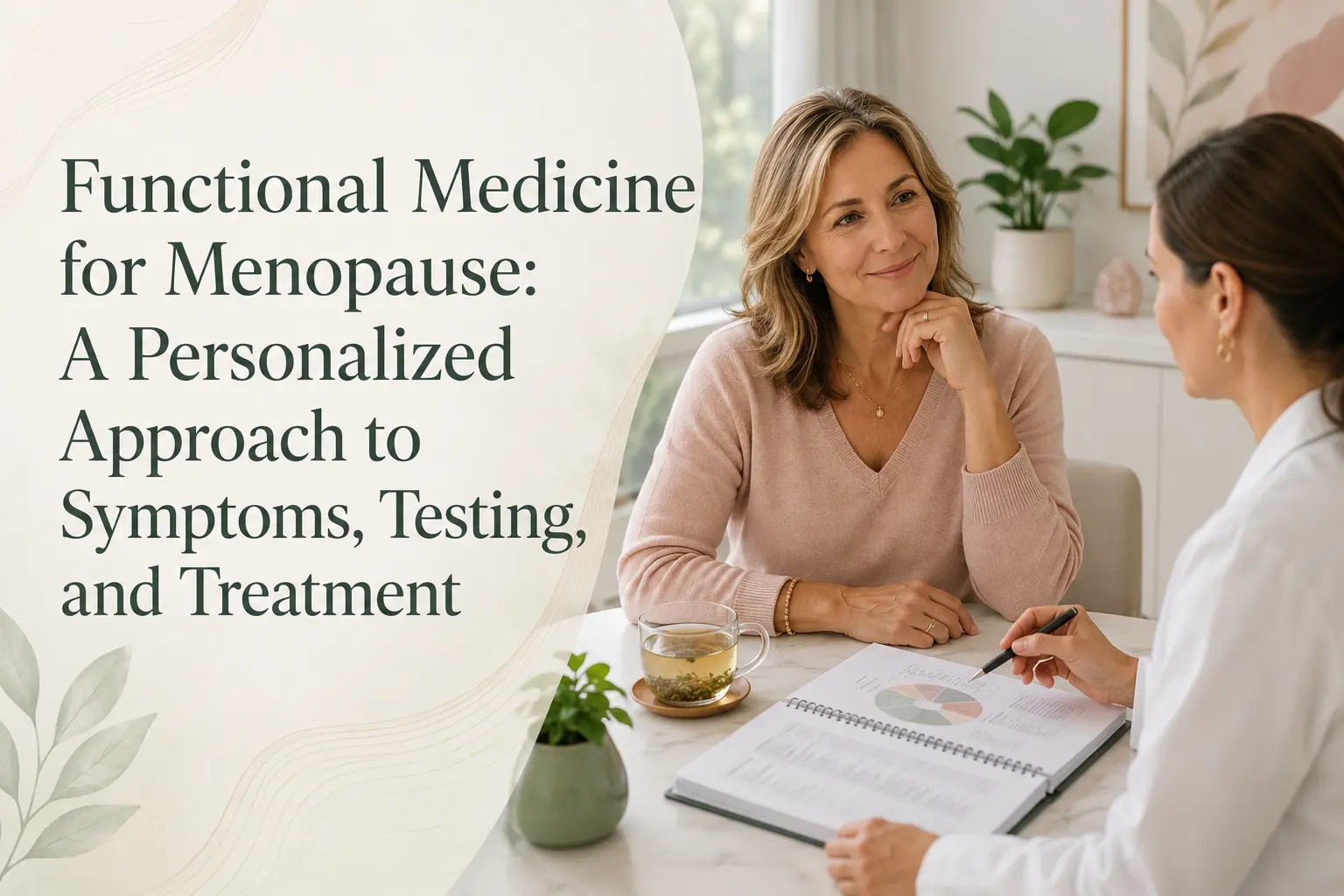
Functional Medicine for Menopause
- Functional Medicine
- Share this post on:
- Share this post on:
Post Contents
Functional medicine for menopause is a personalized approach that considers hormonal changes alongside sleep, nutrition, stress, metabolic health, thyroid function, medical history, and other factors that may affect how you feel.
Treatment may include hormone therapy, nonhormonal care, lifestyle changes, and targeted testing based on your individual symptoms, risks, and goals.
Menopause is a natural biological transition, not a disease or condition that needs to be reversed.
However, symptoms such as hot flashes, poor sleep, weight changes, fatigue, brain fog, anxiety, and vaginal dryness can significantly affect daily life.
A functional medicine approach looks at those symptoms within the context of your overall health.
The goal is to determine which concerns may be related to menopause, identify other factors that could be contributing, and develop a treatment plan that fits your needs.
SEE HOW FUNCTIONAL MEDICINE CAN HELP YOU
What Is Functional Medicine for Menopause?
Functional medicine examines how different areas of health may interact rather than looking at each symptom in isolation.
During a menopause evaluation, a functional medicine provider may review:
- When your symptoms began
- Changes in your menstrual cycle
- Which symptoms affect you most
- Your personal and family medical history
- Current medications and supplements
- Sleep quality
- Stress and emotional well-being
- Nutrition and physical activity
- Blood sugar and cardiovascular health
- Thyroid function
- Bone and muscle health
- Digestive symptoms
- Sexual and urinary health
This broader evaluation does not mean every menopause symptom has a hidden underlying cause.
Menopause occurs as ovarian function declines and hormone production changes with age.
However, symptoms such as fatigue, weight gain, anxiety, insomnia, and difficulty concentrating can also be affected by thyroid conditions, anemia, sleep disorders, medication side effects, metabolic concerns, nutrient deficiencies, or chronic stress.
A detailed assessment helps clarify what may be happening rather than assuming every midlife symptom is hormonal.
What Is the Difference Between Perimenopause and Menopause?
Perimenopause is the transition leading up to menopause.
It often begins during a woman’s 40s, although it can start earlier or later.
During perimenopause, estrogen and progesterone levels can fluctuate considerably.
Menstrual cycles may become shorter, longer, heavier, lighter, or less predictable.
Symptoms may also change from one month to the next.
Menopause is confirmed after 12 consecutive months without a menstrual period when there is no other medical explanation.
Postmenopause refers to the years that follow.
Symptoms may begin several years before the final menstrual period and continue afterward.
Some women experience relatively mild changes, while others have symptoms that interfere with sleep, work, exercise, relationships, and overall quality of life.
Which Menopause Symptoms Can Functional Medicine Help Manage?
Functional medicine may help manage a wide range of menopause-related concerns while also evaluating whether another condition could be contributing.
| Symptom | How Menopause May Contribute | Other Factors That May Be Considered |
| Hot flashes and night sweats | Estrogen changes can affect temperature regulation | Alcohol, stress, medications, thyroid conditions |
| Irregular periods | Ovulation becomes less predictable during perimenopause | Pregnancy, thyroid disorders, fibroids, polyps |
| Poor sleep | Night sweats and hormonal changes may interrupt sleep | Sleep apnea, anxiety, caffeine, alcohol |
| Fatigue | Hormone changes and disrupted sleep may reduce energy | Anemia, thyroid disease, nutrient deficiencies |
| Brain fog | Hormonal shifts and poor sleep may affect concentration | Stress, medications, thyroid concerns |
| Mood changes | Hormone fluctuations may affect emotional well-being | Anxiety, depression, chronic stress |
| Weight changes | Estrogen decline and aging can affect fat distribution and muscle mass | Insulin resistance, activity, nutrition, sleep |
| Joint discomfort | Hormonal changes may contribute to stiffness or aches | Osteoarthritis, injury, inflammation |
| Low libido | Hormonal changes may affect desire and arousal | Stress, pain, medications, relationship factors |
| Vaginal dryness | Lower estrogen affects vaginal and urinary tissues | Infection, pelvic floor concerns, skin conditions |
Hot flashes, night sweats, vaginal dryness, and urinary changes are closely associated with menopause.
Other concerns may have several possible causes, which is why a personalized evaluation can be helpful.
How Does Functional Medicine for Menopause Work?
Functional medicine for menopause usually begins with a detailed conversation rather than a standard list of tests, medications, or supplements.
Reviewing Your Health and Symptom Timeline
Your provider may ask when your symptoms started, how they have changed, and whether they follow a particular pattern.
Menstrual changes, previous pregnancies, hormone use, surgeries, medications, medical treatments, stress, and family history may all provide useful context.
Symptoms that began alongside irregular periods may be related to perimenopause.
Symptoms that appeared suddenly, are unusually severe, or do not fit the expected pattern may require a broader medical evaluation.
Identifying the Symptoms That Affect You Most
Not every symptom needs to be treated in the same way.
One patient may primarily need help with hot flashes and insomnia.
Another may be more concerned about body-composition changes, vaginal discomfort, anxiety, low libido, fatigue, or maintaining bone strength.
A personalized plan should focus on the concerns that have the greatest effect on your health and daily life rather than trying to adjust every laboratory marker.
Looking for Overlapping Health Concerns
Menopause symptoms can resemble symptoms caused by other conditions.
Depending on your history, a provider may consider whether thyroid disease, anemia, sleep apnea, depression, anxiety, insulin resistance, nutrient deficiencies, medication effects, or another health concern may be involved.
Changes in menstrual bleeding may also need further investigation.
Irregular periods are common during perimenopause, but heavy bleeding, bleeding between periods, or bleeding after menopause should not automatically be attributed to hormonal changes.
Adjusting Your Plan Over Time
Perimenopause and menopause are not static stages.
Hormones, symptoms, health risks, and treatment preferences may change.
Follow-up care allows your provider to review your response, discuss side effects, monitor relevant health markers, and adjust your treatment plan when needed.
Functional Medicine Testing for Menopause: Which Tests May Be Useful?
Testing can help answer specific clinical questions, but more testing does not always lead to better care.
For many women over 45, perimenopause can be identified from age, symptoms, menstrual changes, and medical history.
A single estrogen or follicle-stimulating hormone test may not provide a clear answer because hormone levels can fluctuate considerably during perimenopause.
Testing should be selected because the result may help explain a symptom, rule out another condition, or change the treatment plan.
Common Tests That May Be Considered
Depending on your symptoms and medical history, testing may include:
- A complete blood count to assess for anemia or other concerns
- Thyroid testing
- Blood glucose or A1c
- A lipid panel
- Liver and kidney function tests
- Iron, vitamin B12, or vitamin D testing when indicated
- Hormone testing in selected situations
- Bone-density screening based on age and risk factors
FSH or estradiol testing may be more useful when symptoms occur at an unusually young age, menstrual history is unclear, periods are affected by certain medications or procedures, or another condition is suspected.
Are Advanced Functional Medicine Tests Always Necessary?
No.
Advanced hormone, nutrient, metabolic, digestive, or stress-related testing may be useful when it addresses a specific concern, but it is not automatically necessary for every patient.
The key question is whether the result is likely to clarify the clinical picture or change treatment.
A personalized evaluation should determine which tests are appropriate rather than using the same testing package for every woman.
Can Hormone Testing Confirm Perimenopause?
Not always.
Hormone levels may rise and fall throughout the menstrual cycle and from one cycle to the next.
A normal test does not necessarily rule out perimenopause, and an abnormal result does not automatically explain every symptom.
For many women, age, symptoms, menstrual patterns, health history, and the exclusion of other possible causes are more informative than one hormone result.
How Functional Medicine May Address Common Menopause Concerns
Menopause can affect several areas of health at once.
A functional medicine plan may combine symptom treatment with support for sleep, metabolism, nutrition, movement, and emotional well-being.
Menopause Weight Gain and Body-Composition Changes
Many women notice that maintaining their usual weight becomes more difficult during midlife.
Fat may also begin to collect more around the abdomen, while muscle mass gradually declines.
Hormonal changes may contribute, but they are rarely the only factor.
Sleep, physical activity, nutrition, stress, medications, aging, and insulin sensitivity can all influence body composition.
A personalized plan may include strength training, adequate protein, fibre-rich foods, improved sleep, metabolic testing, and realistic adjustments to overall food intake.
The goal should be to support long-term metabolic health and muscle preservation rather than promising rapid weight loss.
Brain Fog and Difficulty Concentrating
Some women experience forgetfulness, slower recall, or difficulty focusing during perimenopause and menopause.
Hormonal fluctuations may play a role, but disrupted sleep, night sweats, stress, anxiety, thyroid conditions, nutrient deficiencies, and medications should also be considered.
Treatment may focus on improving sleep, managing hot flashes, addressing stress, reviewing medications, correcting deficiencies when present, and evaluating other possible causes.
Fatigue and Low Energy
Fatigue is common during menopause, but it should not automatically be dismissed as a normal part of aging.
Poor sleep, night sweats, anemia, thyroid disease, inadequate nutrition, depression, low physical activity, medication side effects, and blood sugar concerns may all contribute.
A functional medicine evaluation may use your symptom history and selected testing to determine which areas should be addressed.
Anxiety, Irritability, and Mood Changes
Hormonal fluctuations during perimenopause may contribute to anxiety, irritability, or mood changes.
However, midlife can also bring work stress, caregiving responsibilities, relationship changes, and concerns about aging.
Support may include hormone or nonhormone treatment when appropriate, counseling, cognitive behavioural strategies, improved sleep, regular movement, and practical stress-management techniques.
Severe depression, panic symptoms, or thoughts of self-harm require prompt professional support.
Poor Sleep and Night Sweats
Sleep problems may result from hot flashes, night sweats, anxiety, alcohol, caffeine, inconsistent sleep routines, or sleep disorders such as sleep apnea.
Treatment should address the reason sleep is being disrupted.
This may include managing vasomotor symptoms, changing evening habits, improving the sleep environment, reviewing medications, or screening for another sleep condition.
Functional Medicine Treatment Options for Menopause
Functional medicine does not have to mean avoiding medications or hormone therapy.
It may combine evidence-based medical treatment with nutrition, movement, sleep support, stress management, and selected supplements.
Menopausal Hormone Therapy
Menopausal hormone therapy replaces some of the hormones that decline during menopause.
It is an effective treatment for bothersome hot flashes and night sweats and may also help certain sleep concerns, vaginal symptoms, and bone loss.
Whether hormone therapy is appropriate depends on factors such as:
- Your age
- How long it has been since menopause began
- Whether you still have a uterus
- Your symptoms
- Your personal and family medical history
- Your risk of blood clots, stroke, heart disease, liver disease, or certain cancers
- Whether you have unexplained vaginal bleeding
- Your personal treatment preferences
If you have a uterus and use systemic estrogen, progesterone or another progestogen is generally needed to protect the uterine lining.
The formulation, dose, and route should be selected through an individualized discussion of potential benefits, limitations, and risks.
Nonhormonal Treatment Options
Some women cannot use hormone therapy or prefer not to.
Nonhormonal prescription treatments may help reduce hot flashes and night sweats.
Cognitive behavioural therapy may also help some women manage sleep problems and the impact of vasomotor symptoms.
The right option depends on your symptoms, medical history, current medications, possible side effects, and preferences.
Nutrition and Metabolic Health
Nutrition cannot stop menopause, but it can support metabolic, cardiovascular, digestive, muscle, and bone health.
A personalized nutrition plan may focus on:
- Adequate protein
- Fibre-rich foods
- Vegetables, fruit, legumes, nuts, seeds, and whole grains
- Healthy sources of dietary fat
- Calcium and vitamin D needs
- Limiting excessive alcohol
- Eating patterns that support stable energy and blood sugar
- Adjusting overall intake when body-composition changes are a concern
There is no single menopause diet that works for everyone.
Recommendations should fit your medical needs, food preferences, culture, digestion, activity level, and long-term routine.
Strength, Movement, and Bone Health
Midlife is an important time to protect muscle, mobility, and bone density.
A well-rounded movement plan may include:
- Resistance training
- Weight-bearing activity
- Aerobic exercise
- Balance exercises
- Mobility work
Strength training can be particularly helpful for maintaining muscle, supporting daily function, and improving body composition.
Exercise may also support sleep, mood, cardiovascular health, insulin sensitivity, and overall quality of life.
Stress and Emotional Well-Being
Stress does not mean menopause symptoms are imaginary.
However, chronic stress can affect sleep, appetite, mood, energy, and how intensely physical symptoms are experienced.
Support may include counseling, breathing exercises, mindfulness, restorative movement, cognitive behavioural strategies, and practical changes that reduce ongoing strain.
Vaginal, Urinary, and Sexual Health
Declining estrogen can contribute to vaginal dryness, irritation, pain during sex, urinary urgency, and recurrent urinary discomfort.
These changes are often grouped under the term genitourinary syndrome of menopause.
Treatment may include vaginal moisturizers, lubricants, pelvic floor care, local hormone treatment, or other medical therapies.
Sexual concerns may also involve stress, relationship factors, fatigue, medications, mood, or pain.
A complete evaluation is often more useful than focusing only on hormone levels.
Supplements and Herbal Products
Supplements may be helpful when there is a documented deficiency or a clear clinical reason for using them.
However, natural does not automatically mean effective or risk-free.
Evidence for many herbal menopause products is inconsistent, and supplements can interact with medications or be inappropriate for certain medical conditions.
Any supplement plan should be selected carefully, reviewed alongside your medications, and monitored for benefits and side effects.
Functional Medicine vs. Standard Menopause Care
Functional medicine and conventional menopause care do not need to be competing approaches.
Both may provide personalized, evidence-informed treatment.
| Standard Menopause Care May Include | A Functional Medicine Model May Place Added Emphasis On |
| Evaluation of symptoms and medical history | A detailed review of nutrition, sleep, stress, activity, and interconnected health concerns |
| Hormone and nonhormone treatment options | Coordinating medical treatment with lifestyle-based support |
| Clinically indicated laboratory testing | Additional targeted testing when results are likely to affect care |
| Preventive screening and risk assessment | More detailed coaching around metabolic health and long-term wellness |
| Ongoing treatment adjustments | Continued monitoring of symptoms, habits, biomarkers, and personal goals |
A responsible functional medicine approach should complement appropriate medical care rather than replace recommended screening, diagnosis, or treatment.
Functional Medicine for Perimenopause: How Can It Help?
Functional medicine for perimenopause may help women manage changing symptoms while considering the wider health factors that influence how they feel.
Because hormone levels and menstrual cycles can fluctuate significantly during perimenopause, care may need to be adjusted over time.
A functional medicine perimenopause plan may consider:
- Changes in menstrual timing and flow
- Hot flashes or night sweats
- Poor sleep
- Anxiety or irritability
- Brain fog
- Fatigue
- Weight or body-composition changes
- Thyroid and metabolic health
- Nutrition and activity
- Family and medical history
A perimenopause functional medicine evaluation should involve more than a single hormone test.
It should include a detailed history, an assessment of symptoms and health risks, and a discussion of treatment options.
Functional medicine should not assume every new symptom is caused by hormones.
New, severe, or unusual concerns still require an appropriate medical evaluation.
Who May Benefit From Functional Medicine for Menopause?
This approach may be helpful for women who:
- Have several symptoms that may overlap
- Want to determine whether another health concern is contributing
- Prefer a plan that includes lifestyle support
- Want to discuss both hormone and nonhormone options
- Have persistent symptoms despite making basic changes
- Are concerned about muscle, bone, metabolic, or cardiovascular health
- Want ongoing follow-up as symptoms change
- Prefer a detailed, collaborative treatment process
Functional medicine may be less helpful when it relies on unnecessary testing, rigid supplement protocols, or promises to reverse menopause.
Care should remain individualized, medically responsible, and based on the patient’s actual needs.
When Should You Seek Medical Care?
You do not need to wait until symptoms become unbearable to speak with a healthcare provider.
Consider scheduling an evaluation when menopause or perimenopause symptoms interfere with:
- Sleep
- Concentration
- Work
- Exercise
- Relationships
- Sexual comfort
- Emotional well-being
- Overall quality of life
Seek prompt medical care for:
- Bleeding after menopause
- Very heavy or prolonged bleeding
- New bleeding between periods
- Persistent or severe pelvic pain
- Chest pain or difficulty breathing
- New neurological symptoms
- Severe or rapidly worsening depression or anxiety
- A new breast lump
- Unexplained weight loss
Bleeding after menopause should always be evaluated rather than assumed to be a normal hormonal change.
What to Expect From Functional Medicine Menopause Care at Amari Health
At Amari Health, menopause care begins with understanding your symptoms, health history, concerns, and goals.
1. Discovery Call
An initial conversation gives you an opportunity to discuss what you have been experiencing and learn more about the available care options.
2. Personalized Health Consultation
Your provider reviews your symptoms, menstrual history, medical history, medications, previous treatments, lifestyle, and priorities.
3. Selected Testing
Bloodwork, hormone testing, metabolic markers, or advanced functional medicine testing may be considered based on your individual needs.
Testing is used to clarify the clinical picture and guide treatment rather than replace a detailed health assessment.
4. Individualized Treatment Plan
Your plan may include hormone support when appropriate, nutrition recommendations, movement, sleep strategies, stress management, supplements, or other therapies based on your health profile.
5. Follow-Up and Adjustments
Follow-up visits allow your provider to review progress, discuss side effects, monitor relevant markers, and adjust treatment as your symptoms and needs change.
What Amari Health’s Care Team Considers During a Menopause Evaluation
A meaningful menopause evaluation should look beyond whether one hormone level falls inside or outside a reference range.
The care team may consider:
- Which symptoms appeared first
- Whether symptoms follow changes in the menstrual cycle
- Which concerns are most disruptive
- Whether another health condition could be involved
- Which tests are likely to provide useful information
- Whether hormone therapy may be appropriate
- How nutrition, movement, sleep, and stress affect symptoms
- How treatment may need to change over time
This approach helps create a plan based on the individual rather than applying the same protocol to every patient.
Medical review note: Add the name, credentials, and profile link of the Amari Health clinician who reviews and approves the final article before publication.
Functional Medicine for Menopause in Scarsdale, NY
Amari Health provides personalized functional medicine and longevity support.
Whether you are beginning to notice irregular periods or managing persistent symptoms after menopause, care may include an evaluation of hormone-related concerns, metabolic health, nutrition, sleep, stress, thyroid function, and other factors that influence how you feel.
Contact us today to learn how you get get relief from your menopause symptoms.
Take a More Personalized Approach to Menopause
Menopause is natural, but disruptive symptoms do not have to be ignored.
Functional medicine for menopause considers hormonal changes as one part of a broader health picture.
By reviewing your symptoms, history, lifestyle, medical risks, and goals, your provider can create a plan that may include medical treatment, nutrition, movement, sleep support, stress management, and carefully selected testing.
Amari Health offers personalized menopause and perimenopause care in Scarsdale, NY.
Schedule a discovery call to discuss your symptoms, explore your treatment options, and determine an appropriate next step.
FAQs: Functional Medicine for Menopause
What is functional medicine for menopause?
Functional medicine for menopause is a personalized approach that considers menopause symptoms alongside medical history, nutrition, sleep, stress, metabolic health, thyroid function, and related concerns. Treatment may include hormone therapy, nonhormonal options, lifestyle changes, and targeted testing.
Can functional medicine help with menopause symptoms?
It may help by determining which symptoms are likely related to menopause, assessing other possible contributors, and developing an individualized plan. Results depend on the symptoms, their causes, your overall health, and the treatments selected.
Can functional medicine help with menopause weight gain?
Functional medicine may evaluate factors that contribute to weight and body-composition changes, including nutrition, muscle loss, sleep, activity, medications, thyroid health, and insulin sensitivity. Treatment should focus on sustainable metabolic health rather than promising a specific amount of weight loss.
What does a functional medicine perimenopause plan include?
A functional medicine perimenopause plan may include a detailed symptom and menstrual history, selected laboratory testing, nutrition guidance, sleep and stress support, exercise recommendations, and hormone or nonhormone treatment when appropriate. The plan may change as cycles and symptoms evolve.
Is hormone replacement therapy part of functional medicine?
It can be. Functional medicine is not necessarily an alternative to hormone therapy. When appropriate, hormone therapy may be combined with nutrition, exercise, sleep support, stress management, and ongoing monitoring.
Can menopause symptoms be treated without hormones?
Yes. Depending on the symptom, treatment may include nonhormonal prescription medications, cognitive behavioural therapy, sleep support, vaginal moisturizers, pelvic floor care, nutrition, exercise, or other options.

Not Sure Where to Start?
Lorem ipsum dolor sit amet consectetur. Et ultrices nunc donec placerat. In velit mattis ac arcu vitae tortor ullamcorper.