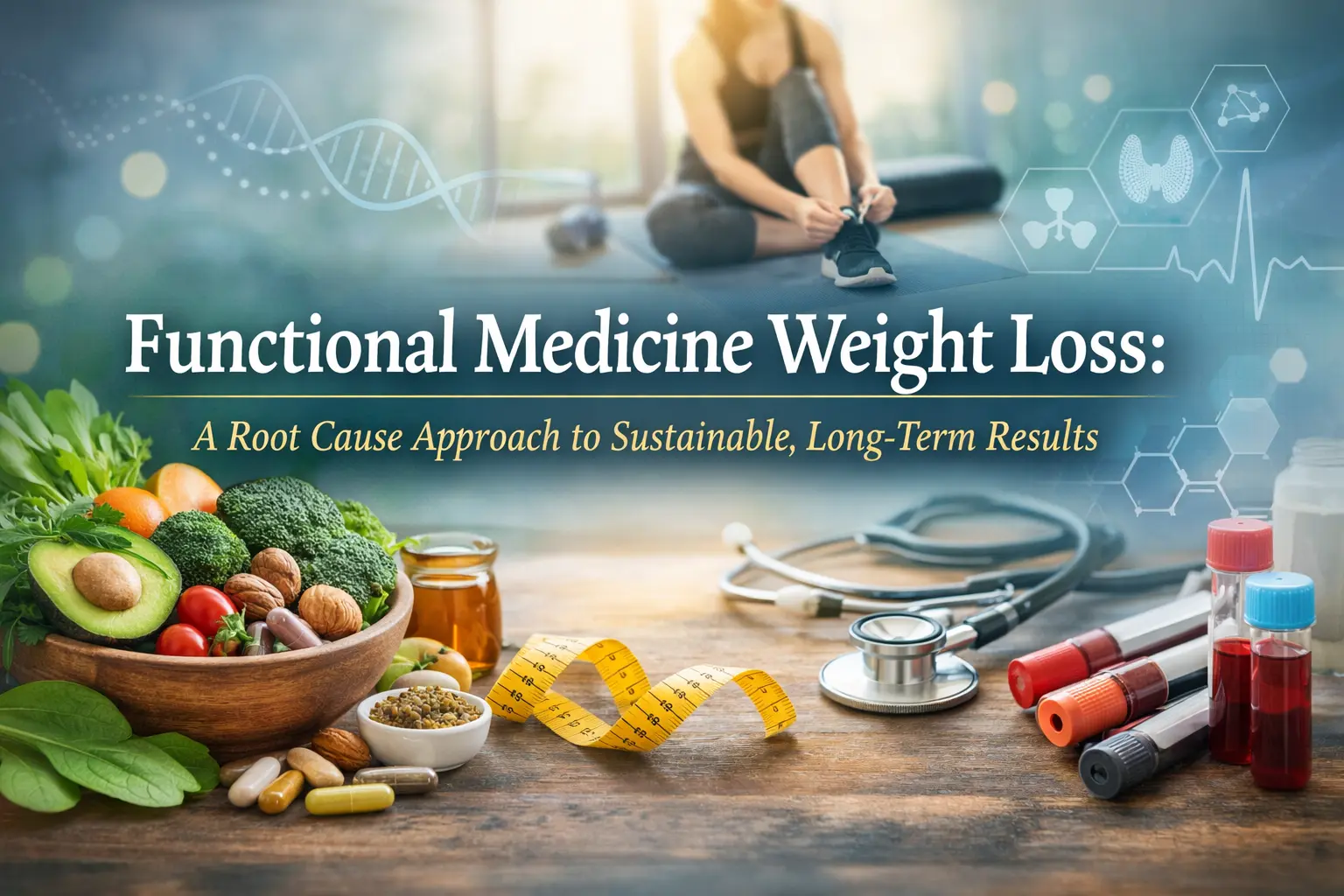
Functional Medicine Weight Loss
- Functional Medicine
- Share this post on:
- Share this post on:
Post Contents
Many people struggling with weight loss feel like they are doing everything right but still not seeing progress.
You may be eating well, exercising consistently, and trying different diets, yet the results don’t last.
Functional medicine weight loss takes a different approach.
Instead of focusing only on calories or short-term dieting strategies, it looks deeper to identify why weight gain or weight loss resistance is happening in the first place.
Functional medicine views weight gain as a symptom of underlying imbalances in the body.
By identifying and addressing root causes such as hormone imbalance, inflammation, gut health issues, insulin resistance, nutrient deficiencies, and metabolic dysfunction, this approach supports sustainable weight loss and overall health improvement.
Rather than forcing the body to lose weight, functional medicine works to help the body function more efficiently so weight loss can happen naturally.
SEE HOW FUNCTIONAL MEDICINE CAN HELP YOU
What Is Functional Medicine Weight Loss?
Functional medicine weight loss is a personalized, whole-body approach that focuses on improving metabolic health.
Instead of using a one-size-fits-all diet plan, functional medicine evaluates the biological, lifestyle, and environmental factors that influence weight.
This approach recognizes that weight gain is often influenced by multiple interconnected factors, including:
- hormone imbalances
- insulin resistance
- thyroid dysfunction
- gut microbiome imbalance
- chronic inflammation
- stress and cortisol dysregulation
- poor sleep quality
- nutrient deficiencies
- genetics
- lifestyle habits
Functional medicine practitioners use detailed health histories, advanced lab testing, and individualized treatment plans to address these contributors.
The goal is not only weight loss, but also improved energy, stable blood sugar, balanced hormones, improved digestion, and long-term metabolic health.
Why Traditional Weight Loss Methods Often Fall Short
Many traditional weight loss programs focus primarily on calorie restriction or increased exercise.
While these approaches may lead to short-term results, they often do not address the biological factors that influence metabolism.
Common reasons traditional dieting approaches may not lead to lasting results include:
Metabolic adaptation
When calorie intake is significantly reduced, the body may respond by slowing metabolic rate to conserve energy.
This adaptation can make continued weight loss more difficult over time.
Hormonal disruption
Hormones regulate appetite, fat storage, metabolism, and energy levels.
When hormones are not balanced, the body may resist losing weight.
Blood sugar instability
Frequent spikes and drops in blood sugar may increase cravings and hunger, making consistency more difficult.
Chronic inflammation
Inflammation can interfere with insulin signaling and metabolic efficiency.
Elevated cortisol levels
Chronic stress can increase cortisol, which may contribute to abdominal fat accumulation and increased appetite.
Gut health imbalances
The gut microbiome influences digestion, immune health, inflammation levels, and metabolism.
Functional medicine weight loss aims to address these underlying contributors so the body is better able to regulate weight naturally.
How Functional Medicine Identifies Root Causes of Weight Gain
Functional medicine looks at the body as an interconnected system.
Identifying root causes allows for more targeted and personalized treatment strategies.
Hormone Imbalance and Weight Gain
Hormones play a significant role in metabolism, fat storage, and appetite regulation.
Hormones commonly evaluated include:
- thyroid hormones that regulate metabolic rate
- insulin, which influences blood sugar control and fat storage
- cortisol, the primary stress hormone
- estrogen and progesterone, which influence fat distribution
- testosterone, which affects muscle mass and metabolic function
- leptin and ghrelin, which regulate hunger and fullness signals
Even subtle hormone imbalances may affect weight regulation.
Insulin Resistance and Blood Sugar Dysregulation
Insulin resistance is one of the most common underlying contributors to weight gain and difficulty losing weight.
When insulin levels remain elevated, the body is more likely to store fat rather than use fat for energy.
Common signs of insulin resistance include:
- difficulty losing weight
- increased abdominal fat
- sugar cravings
- fatigue after meals
- increased hunger shortly after eating
- elevated fasting glucose levels
Improving insulin sensitivity may support metabolic flexibility and more efficient fat metabolism.
Gut Health and the Microbiome
The gut microbiome plays an important role in digestion, inflammation balance, immune function, and metabolic activity.
Gut health imbalances that may affect weight include:
- microbial imbalance
- digestive discomfort
- increased intestinal permeability
- poor nutrient absorption
- food sensitivities
- chronic bloating
Improving gut health may support improved metabolic function and reduced inflammation.
Chronic Inflammation and Metabolic Function
Inflammation can interfere with hormone signaling and insulin sensitivity.
Common contributors to chronic inflammation include:
- highly processed foods
- food sensitivities
- environmental exposures
- chronic stress
- poor gut health
- lack of restorative sleep
Reducing inflammation may help improve metabolic efficiency and energy regulation.
Stress, Sleep, and Cortisol Balance
Sleep and stress management are often overlooked factors in weight regulation.
Elevated cortisol levels may:
- increase fat storage
- increase appetite
- disrupt blood sugar balance
- reduce metabolic efficiency
- interfere with hormone balance
Improving sleep quality and stress resilience supports overall metabolic health.
Functional Medicine Testing for Weight Loss
Functional medicine may use advanced testing to better understand the biological factors affecting metabolism.
Testing may include:
- comprehensive metabolic panels
- thyroid function testing beyond standard screening markers
- fasting insulin levels
- hemoglobin A1C
- inflammatory markers
- cortisol rhythm testing
- sex hormone panels
- micronutrient testing
- gut microbiome testing
- metabolic markers related to insulin sensitivity
These insights help guide personalized treatment strategies.
What a Functional Medicine Weight Loss Plan May Include
Functional medicine weight loss programs are individualized based on each person’s health history, symptoms, lifestyle, and lab findings.
Personalized Nutrition Strategy
Nutrition plans are designed to support stable blood sugar, reduce inflammation, and support metabolic health.
Plans often focus on:
- nutrient-dense whole foods
- adequate protein intake
- healthy fats that support hormone production
- fiber-rich carbohydrates
- blood sugar stability
- identifying potential food sensitivities
- reducing ultra-processed foods
The goal is to create sustainable dietary habits that support long-term health.
Lifestyle Optimization
Daily habits play an important role in metabolic health.
Lifestyle strategies may include:
- improving sleep consistency and quality
- supporting stress resilience
- optimizing movement and physical activity
- improving recovery and energy balance
- creating sustainable routines
Small lifestyle improvements can support significant metabolic changes over time.
Gut Health Support
Supporting gut health may include:
- dietary adjustments
- microbiome support strategies
- digestive support protocols
- reducing gut inflammation
- improving nutrient absorption
Gut health improvements may influence metabolic function and overall well-being.
Hormone Optimization
When clinically appropriate, addressing hormone imbalances may support metabolic health.
Balanced hormones may help support:
- energy levels
- muscle maintenance
- fat metabolism
- appetite regulation
- metabolic efficiency
Targeted Supplementation
Supplement strategies are typically based on individual lab findings and health needs.
Targeted supplementation may support:
- metabolic function
- insulin sensitivity
- inflammation balance
- micronutrient status
- digestive health
Benefits of Functional Medicine for Weight Loss
Functional medicine weight loss focuses on improving health in a sustainable and comprehensive way.
Potential benefits include:
- sustainable fat loss
- improved metabolic efficiency
- increased energy levels
- improved blood sugar regulation
- reduced inflammation
- improved digestion
- improved hormone balance
- reduced cravings
- improved mental clarity
- improved long-term weight maintenance
- improved metabolic flexibility
By addressing underlying imbalances, the body may respond more effectively to lifestyle changes.
Who Is a Good Candidate for Functional Medicine Weight Loss?
Functional medicine weight loss may be beneficial for individuals who:
- struggle to lose weight despite consistent diet and exercise
- regain weight after dieting
- experience persistent fatigue
- suspect hormone imbalance
- have thyroid dysfunction
- have insulin resistance
- experience menopause-related weight changes
- have PCOS
- experience chronic inflammation
- have digestive symptoms
- want a personalized weight loss strategy
- want sustainable results rather than short-term weight loss
Functional Medicine vs Traditional Weight Loss Approaches
Traditional weight loss approaches often focus primarily on calorie restriction and generalized diet plans.
Functional medicine takes a more comprehensive approach that considers:
- metabolic health
- hormone balance
- blood sugar regulation
- gut microbiome health
- inflammation levels
- nutrient status
- lifestyle habits
- stress physiology
- sleep quality
By addressing these interconnected factors, functional medicine aims to create a foundation for long-term weight management.
What the Functional Medicine Weight Loss Process May Look Like
While every plan is personalized, many individuals follow a structured process:
- Initial health assessment: A detailed review of symptoms, health history, lifestyle habits, and goals helps identify potential contributing factors.
- Advanced lab testing: Testing helps identify metabolic, hormonal, or inflammatory imbalances that may influence weight.
- Personalized care plan: A customized plan may include nutrition strategies, lifestyle adjustments, gut health support, metabolic support, and other targeted therapies.
- Ongoing adjustments: Care plans are adjusted over time based on progress and individual response.
- Long-term metabolic support: The focus remains on maintaining results and supporting long-term health.
How Long Does Functional Medicine Weight Loss Take?
Weight loss timelines vary depending on underlying health factors and metabolic function.
Some individuals may notice improvements in:
- energy levels
- appetite regulation
- digestion
- cravings
- mental clarity
within the first several weeks.
Because functional medicine focuses on improving metabolic function, progress is typically gradual and sustainable rather than rapid and temporary.
Long-term success often involves improving metabolic flexibility and supporting consistent lifestyle habits.
Why a Personalized Approach Supports Long-Term Success
Each individual has a unique metabolic profile influenced by genetics, lifestyle, medical history, and environmental factors.
Personalized care allows treatment plans to be tailored to:
- individual symptoms
- lab findings
- lifestyle habits
- health goals
- metabolic needs
This individualized approach may support long-term adherence and improved health outcomes.
Functional Medicine Weight Loss at Amari Health
Amari Health provides a comprehensive approach to weight loss that focuses on identifying and addressing underlying factors that influence metabolism.
Care plans are designed to support:
- metabolic balance
- hormone health
- digestive health
- inflammation reduction
- blood sugar stability
- sustainable lifestyle habits
By addressing root causes of weight gain, functional medicine provides a pathway toward long-term wellness and metabolic health.
The goal is to help patients improve overall health while working toward a healthy and maintainable weight.
FAQs: Functional Medicine Weight Loss
Does functional medicine help with weight loss?
Functional medicine may support weight loss by identifying underlying contributors such as hormone imbalance, inflammation, gut health dysfunction, and blood sugar dysregulation. Addressing these factors may improve metabolic function and support sustainable results.
What is a functional medicine approach to obesity?
A functional medicine approach to obesity focuses on identifying biological and lifestyle factors that contribute to weight gain. Treatment plans often include personalized nutrition strategies, metabolic support, lifestyle optimization, and hormone balance support.
Can functional medicine help with hormonal weight gain?
Hormonal imbalances can influence metabolism, appetite, and fat storage. Functional medicine evaluates hormone function and creates individualized plans to support balance and metabolic health.
Can functional medicine help with insulin resistance?
Functional medicine often addresses insulin resistance through personalized nutrition, lifestyle strategies, and metabolic support approaches designed to improve insulin sensitivity.
How is functional medicine different from dieting?
Traditional dieting often focuses only on calorie intake. Functional medicine focuses on identifying underlying factors that influence weight gain, such as hormone imbalance, inflammation, gut health issues, and metabolic dysfunction.
Can functional medicine help with menopause weight gain?
Hormonal changes during menopause may influence metabolism and fat distribution. Functional medicine may help identify contributing factors and create personalized strategies to support metabolic health.
Is functional medicine weight loss sustainable?
Functional medicine focuses on improving metabolic health and supporting long-term lifestyle changes. By addressing root causes of weight gain, this approach may support sustainable weight management over time.

Not Sure Where to Start?
Lorem ipsum dolor sit amet consectetur. Et ultrices nunc donec placerat. In velit mattis ac arcu vitae tortor ullamcorper.