Can HRT Help You Lose Weight?
- HRT
- Share this post on:
- Share this post on:
Post Contents
If you feel like losing weight became harder almost overnight during perimenopause or menopause, you are not imagining it.
Many women notice stubborn belly fat, slower metabolism, lower energy levels, poor sleep, and changes in body composition during this stage of life.
Even women who eat well and stay active may suddenly struggle with weight gain that feels impossible to reverse.
That is why so many women ask:
Can HRT help you lose weight?
The short answer is that hormone replacement therapy (HRT) may help support weight loss for some women, especially when hormonal changes are making it harder to maintain a healthy weight during menopause.
However, HRT is not considered a traditional weight loss treatment or a quick fix.
Instead, HRT may help improve several underlying factors connected to menopause weight gain, including metabolism, sleep quality, muscle loss, insulin sensitivity, and energy levels.
For many women, that can make healthy weight loss feel more realistic again.
SEE IF HRT CAN HELP YOUR WEIGHT LOSS GOALS
Why Menopause Often Causes Weight Gain
Studies show weight gain during menopause is extremely common, especially around the abdomen.
One of the biggest reasons is declining estrogen levels.
Estrogen affects several processes tied to metabolism, body composition, appetite regulation, and fat storage.
As estrogen drops, the body often begins storing more fat around the midsection instead of the hips and thighs.
At the same time, women naturally lose muscle mass with age.
Since muscle burns more calories than fat, losing lean muscle can slow metabolism and make weight gain easier.
Menopause can also affect lifestyle habits in ways that contribute to weight gain.
Many women experience:
- Fatigue
- Poor sleep
- Increased stress and cortisol
- Mood changes
- Lower motivation to exercise
- Insulin resistance
- Increased cravings
- Reduced recovery from workouts
These hormonal and metabolic changes are a major reason why many women feel like their normal diet and exercise routines stop working during menopause.
Can HRT Actually Help You Lose Weight?
HRT may help support weight management indirectly by improving symptoms and hormonal imbalances that can make weight loss more difficult.
For example, women who sleep better, feel more energized, and experience fewer menopause symptoms may find it easier to:
- Exercise consistently
- Build or maintain muscle
- Recover from workouts
- Manage cravings
- Stay physically active throughout the day
Some women also notice improvements in body composition, meaning they may lose inches around the waist or maintain lean muscle more effectively even if the number on the scale changes slowly.
Research has also suggested that hormone replacement therapy may help reduce the accumulation of abdominal fat during menopause in some women.
Still, HRT works best as part of a larger health strategy that includes nutrition, movement, sleep, and stress management.
Does HRT Help With Belly Fat?
Many women specifically look into HRT because of stubborn menopause belly fat.
Lower estrogen levels are associated with increased visceral fat, which is the deeper abdominal fat stored around the organs.
This type of fat is linked to insulin resistance, heart disease, inflammation, and metabolic dysfunction.
HRT may help support healthier fat distribution during menopause by improving hormonal balance and reducing some of the metabolic changes associated with estrogen decline.
Some women report:
- Less bloating
- Reduced waist circumference
- Improved muscle tone
- Better workout performance
- Easier weight maintenance
However, HRT is not a guaranteed solution for belly fat.
Factors like stress, sleep quality, diet, activity level, insulin resistance, and genetics still play a major role.
Why Weight Loss Feels Harder During Menopause
Many women become frustrated during menopause because the same habits that worked earlier in life suddenly stop producing results.
This is not simply about getting older.
Hormonal changes can directly affect:
- Metabolism
- Muscle maintenance
- Appetite
- Blood sugar regulation
- Fat storage
- Energy production
As estrogen declines, the body may burn fewer calories at rest and store fat more easily around the abdomen.
Sleep disruption also becomes more common during menopause.
Poor sleep can increase cortisol levels, worsen cravings, reduce recovery from exercise, and contribute to additional weight gain.
For some women, menopause can also increase insulin resistance, which may make fat loss slower and cravings more intense.
How Long Does It Take to Lose Weight on HRT?
HRT does not usually cause rapid weight loss overnight.
Instead, many women notice gradual improvements over time as hormone levels stabilize and menopause symptoms become more manageable.
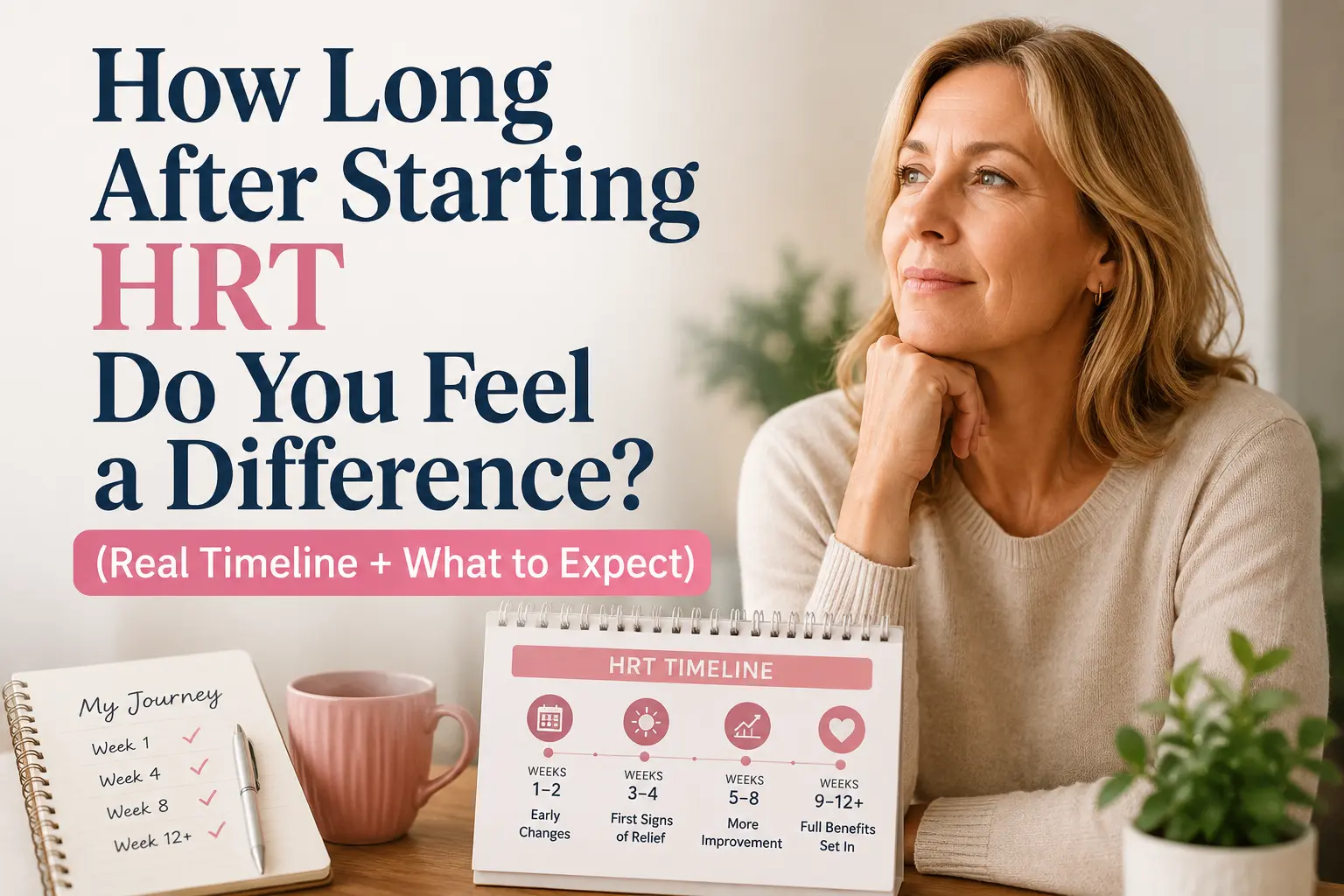
A general timeline may look something like this:
First Few Weeks
- Better sleep
- Reduced hot flashes
- Improved mood
- More stable energy levels
2 to 3 Months
- Better workout consistency
- Reduced bloating
- Improved recovery
- Fewer cravings
3 to 6 Months
- Changes in body composition
- Easier weight maintenance
- Reduced abdominal fat accumulation
- Improved muscle preservation
Results vary from person to person depending on:
- Hormone levels
- Age
- Type of HRT
- Nutrition habits
- Exercise routine
- Stress levels
- Existing metabolic health
Why Some Women Gain Weight on HRT
Not every woman loses weight on HRT, and some women may temporarily gain weight after starting treatment.
This may happen because of:
- Water retention
- Hormonal adjustments
- Changes in progesterone levels
- Increased appetite
- Reduced activity levels unrelated to HRT
In many cases, early bloating or fluid retention improves as the body adapts to treatment.
It is also important to understand that HRT cannot completely offset factors like chronic stress, lack of sleep, poor nutrition, or a sedentary lifestyle.
What Is the Best HRT for Weight Loss?
There is no single “best” form of HRT for weight loss because treatment should be personalized based on symptoms, hormone levels, medical history, and health goals.
Depending on the individual, treatment may include:
- Estrogen therapy
- Progesterone therapy
- Combination therapy
- Testosterone support in some cases
Some women respond well to patches or creams, while others prefer oral medications.
The goal of HRT is typically to improve menopause symptoms and support overall health rather than simply produce weight loss.
HRT and Metabolism
Hormones affect much more than reproductive health.
They also play a major role in:
- Metabolism
- Appetite regulation
- Energy production
- Blood sugar balance
- Fat storage
- Muscle maintenance
As hormone levels decline during menopause, metabolism often slows.
This can make it easier to gain weight and harder to lose it even without major lifestyle changes.
HRT may help support metabolic health by improving hormonal balance and helping women preserve lean muscle, maintain energy, and stay physically active.
Can You Combine HRT With Weight Loss Medications?
Some women combine HRT with medical weight loss treatments like GLP-1 medications as part of a medically supervised plan.
GLP-1 medications primarily help with:
- Appetite control
- Blood sugar regulation
- Slower digestion
- Reduced food cravings
Meanwhile, HRT addresses menopause-related hormonal changes and symptoms.
For women struggling with menopause weight gain, insulin resistance, or metabolic dysfunction, combining both approaches may help support better long-term results in some cases.
What Else Helps With Weight Loss During Menopause?
Even if HRT improves hormone balance, healthy lifestyle habits still matter.
The most effective long-term approach to menopause weight loss often includes:
- Strength Training: Resistance training helps preserve muscle mass and support metabolism.
- Higher Protein Intake: Protein can help maintain lean muscle while improving fullness and recovery.
- Better Sleep: Improving sleep quality may help regulate cortisol, appetite, and energy levels.
- Stress Management: Chronic stress may contribute to hormonal imbalance and abdominal fat storage.
- Daily Movement: Walking, resistance training, and regular movement all support metabolic health.
- Blood Sugar Support: Stabilizing blood sugar may help reduce cravings and energy crashes.
Who May Benefit From HRT?
HRT may be appropriate for women experiencing symptoms related to perimenopause or menopause, including:
- Hot flashes
- Night sweats
- Brain fog
- Fatigue
- Mood changes
- Poor sleep
- Low sex drive
- Weight changes
A healthcare provider can evaluate hormone levels, symptoms, medical history, and overall health to determine whether HRT may be appropriate.
Final Thoughts on HRT and Weight Loss
So, can HRT help you lose weight?
For many women, the answer is yes, but usually indirectly.
Hormone replacement therapy may help support weight management by improving hormonal balance, energy levels, sleep quality, metabolism, muscle maintenance, and fat distribution during menopause.
While HRT is not designed to be a standalone weight loss treatment, many women find that once their hormones are better balanced, healthy habits become easier to maintain and stubborn menopause weight gain becomes more manageable.
If menopause symptoms and weight changes are affecting your quality of life, speaking with a provider experienced in hormone health may help you determine whether HRT could be part of a personalized treatment plan.
FAQs: Can HRT Help You Lose Weight
What is the best HRT to lose weight?
There is no single best HRT for weight loss because every woman’s hormone levels, symptoms, and health history are different. Some women respond well to estrogen patches, while others may benefit from combination therapy that includes progesterone or testosterone support. The best approach is a personalized treatment plan designed around your symptoms, metabolism, and overall health goals.
Can HRT help you lose belly fat?
HRT may help reduce menopause-related belly fat for some women by improving hormonal balance and supporting healthier fat distribution. Lower estrogen levels are linked to increased abdominal fat storage during menopause, and hormone therapy may help reduce some of those changes when combined with healthy eating, strength training, sleep, and stress management.
How long does it take for HRT to help lose weight?
Most women do not see immediate weight loss from HRT. Some symptoms like poor sleep, fatigue, and hot flashes may improve within a few weeks, while changes in body composition and weight management can take several months. Many women notice gradual improvements within 3 to 6 months when HRT is combined with healthy lifestyle habits.
Can I take semaglutide with HRT?
Some women take semaglutide and HRT together under medical supervision. These treatments work differently. HRT helps address hormonal changes related to menopause, while semaglutide primarily supports appetite control and blood sugar regulation. Combining both may help support weight loss and metabolic health for some women, but treatment should always be guided by a healthcare provider.
Which is better for weight loss, estrogen or progesterone?
Estrogen generally has a stronger connection to metabolism, fat distribution, and menopause-related weight gain. Progesterone still plays an important role in hormonal balance, sleep, and mood, but estrogen is usually more closely associated with body composition and belly fat changes during menopause.
Is it easier to lose weight on or off HRT?
For some women, losing weight may feel easier on HRT because symptoms like fatigue, poor sleep, mood swings, and low energy improve. When hormone levels are more balanced, many women find it easier to exercise consistently, recover from workouts, manage cravings, and maintain healthy habits.
Why does HRT make you look younger?
HRT may help improve skin hydration, elasticity, sleep quality, and overall energy levels, which can contribute to a more youthful appearance. Hormones like estrogen play a role in collagen production and skin health, so balancing hormone levels during menopause may help reduce some visible signs of aging for certain women.
How long after starting HRT do you feel a difference?
Many women begin noticing some improvements within a few weeks of starting HRT, especially with symptoms like hot flashes, sleep issues, mood changes, and low energy. However, more noticeable changes related to metabolism, body composition, and weight management may take several months. Most women see more consistent results within 3 to 6 months, depending on their hormone levels, lifestyle habits, and overall health.

Not Sure Where to Start?
Lorem ipsum dolor sit amet consectetur. Et ultrices nunc donec placerat. In velit mattis ac arcu vitae tortor ullamcorper.