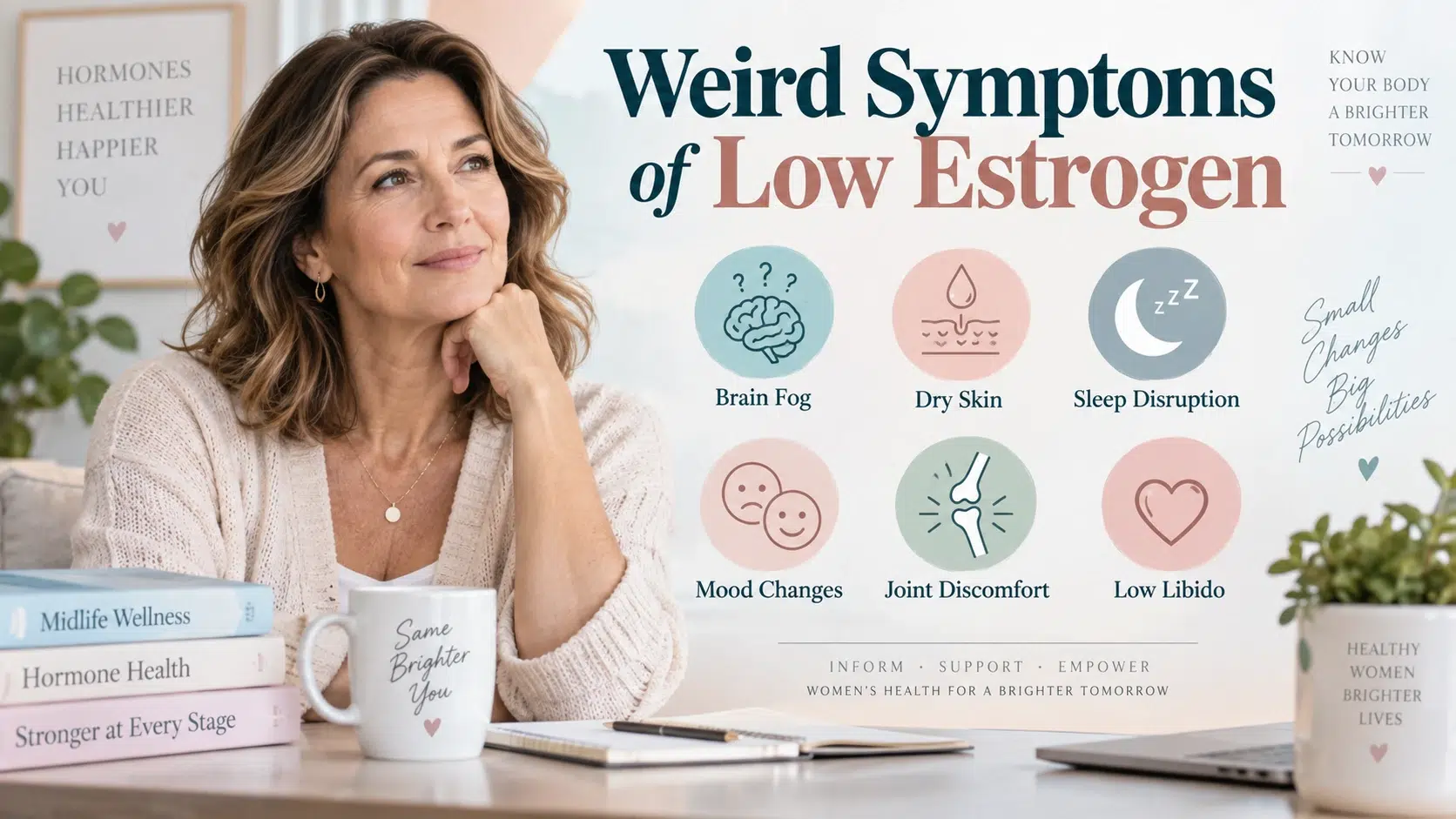
Weird Symptoms of Low Estrogen
- HRT
- Share this post on:
- Share this post on:
Post Contents
Low estrogen doesn’t always show up as hot flashes.
It can also cause burning mouth, tingling hands, ringing ears, joint pain, and brain fog, symptoms most women never connect to their hormones.
This guide breaks down 12 unusual signs of low estrogen, why they happen, and how testing and root-cause hormone care can help.
You expect hot flashes.
You expect night sweats.
Nobody warns you about the metallic taste in your mouth, the ringing in your ears, or the electric zap that shoots through your arm out of nowhere.
These are some of the weird symptoms of low estrogen that rarely make the highlight reel of menopause symptoms, yet they’re incredibly common.
Estrogen receptors sit in tissue all over your body, not just your ovaries, which is why a drop in estrogen can show up in places you’d never expect: your gums, your ears, your joints, even your gut.
If you’ve been collecting a strange list of symptoms and wondering what connects them, your hormones might be the missing link.
GET HELP BALANCING YOUR HORMONES
What Causes Low Estrogen in the First Place?
For most women, low estrogen is tied to perimenopause and menopause, the natural transition when your ovaries slow down estrogen production.
But age isn’t the only cause.
Surgery that removes the ovaries, certain autoimmune conditions, extreme exercise or very low body weight, chemotherapy, and a condition called primary ovarian insufficiency can all cause estrogen to drop earlier than expected.
Some birth control changes and thyroid issues can also throw hormone levels off balance.
Why Do Low Estrogen Symptoms Feel So Random?
Estrogen receptors exist in almost every organ system, including your skin, brain, gut, joints, and inner ear, not just your reproductive organs.
When estrogen drops, any of these tissues can react, which is why symptoms show up in places that seem to have nothing to do with hormones at all.
Cleveland Clinic notes that because women have estrogen receptors throughout nearly every organ system, menopause and low estrogen can affect almost any part of the body.
The National Menopause Foundation’s official symptom checklist lists 36 known symptoms of the menopause transition, and many of them have nothing to do with a hot flash.
12 Weird Symptoms of Low Estrogen
Here are 12 of the least talked about symptoms of low estrogen, along with why they happen.
Burning Mouth or a Metallic Taste
A hot, dry, or metallic feeling in your mouth can be one of the strangest low estrogen symptoms.
Estrogen helps maintain saliva production and the health of your oral tissue, and research links burning mouth syndrome to declining estrogen in postmenopausal women, with some studies estimating it affects as many as 4 in 10 women in this stage of life.
Tingling or “Pins and Needles” in Your Hands and Feet
Estrogen supports healthy blood flow and nerve function.
When levels drop, circulation and nerve signals can be affected, which some women experience as tingling, numbness, or a prickly “pins and needles” feeling in their hands and feet.
Electric Shock Sensations
Some women describe a brief, sharp zap under the skin, often right before a hot flash.
Researchers believe fluctuating estrogen affects nerve activity in ways that can trigger this odd, momentary shock feeling.
Itchy or Crawling Skin
Estrogen helps your skin hold onto collagen and moisture.
As levels fall, skin can thin and dry out, which sometimes creates an itchy or crawling sensation known as formication, even when there’s nothing actually on your skin.
Ringing in Your Ears (Tinnitus)
Your inner ear has estrogen receptors too.
A study on hormone therapy and auditory response in postmenopausal women found that estrogen plays a role in inner ear fluid balance and blood flow, which may explain why some women notice new ringing or buzzing in their ears during perimenopause.
Brain Fog and Word-Finding Trouble
Estrogen supports the neurotransmitters involved in memory, focus, and mental clarity.
When levels drop, you might notice trouble concentrating, misplacing words mid-sentence, or feeling mentally sluggish, even if you’re getting enough sleep.
Joint Pain and Stiffness
Estrogen has an anti-inflammatory effect and helps keep cartilage healthy.
Falling estrogen can make joints stiffer and more prone to aching, especially in the hands, knees, and hips.
If this sounds familiar, it’s worth learning about the connection between hormone therapy and joint pain relief.
Heart Palpitations
A racing or fluttering heartbeat can be unsettling, especially when it comes out of nowhere.
Estrogen influences the autonomic nervous system that regulates heart rate, so a drop in estrogen can occasionally cause palpitations, even in women with no underlying heart condition.
Dry, Burning Eyes
Estrogen helps regulate tear production and eye moisture.
Low levels can leave your eyes feeling dry, gritty, or irritated, and some women also notice blurred vision that comes and goes throughout the day.
Hair Thinning
Estrogen supports the growth phase of your hair cycle.
As it declines, hair can shed more, grow more slowly, and feel thinner overall, particularly around the part line.
It’s one of the physical changes that hormone therapy can sometimes help reverse, alongside its broader effects on how hormone therapy affects hair and skin.
Digestive Changes and Bloating
Your gut relies on estrogen for balance, including how quickly food moves through your digestive system.
When estrogen drops, digestion can slow, bloating can increase, and nutrient absorption can shift, which is part of why a functional medicine approach to gut health often looks at hormones alongside digestion.
New or Worsening Allergies
Estrogen interacts with the immune system and with histamine, the chemical behind allergy symptoms.
As levels shift, some women develop new seasonal allergies or find that existing ones suddenly feel worse than usual.
Is It Low Estrogen, or Something Else?
Many of these symptoms overlap with other conditions, including thyroid disorders, chronic stress, vitamin deficiencies, and anxiety.
Unusual symptoms alone don’t confirm low estrogen, which is why guessing isn’t a great strategy.
If you’re noticing several of these symptoms together, especially alongside changes to your period, it’s worth ruling things out with a provider instead of assuming it’s “just stress.”
Reviewing the broader signs you need hormone replacement therapy can help you see whether your symptoms fit a larger hormonal pattern.
How Do You Know If Your Estrogen Is Actually Low?
A blood, saliva, or urine hormone panel is the only reliable way to confirm low estrogen, since symptoms alone can point to several different conditions.
Testing also shows where you are in your cycle or transition, which shapes what treatment actually makes sense for you.
Despite how common these symptoms are, most women go without answers.
Only about 20 to 25 percent of women with menopause symptoms receive treatment for them.
Getting a clear picture starts with checking your hormone levels rather than piecing together symptoms on your own.
When Do These Symptoms Usually Start?
Most women start noticing unusual estrogen symptoms during perimenopause, the transition phase that can begin in your late 30s or 40s, often years before periods stop completely.
A 2025 study from Monash University found that moderate to severe symptoms were nearly five times more common during perimenopause than before it begins.
Understanding when perimenopause typically starts can help you recognize early symptoms sooner, instead of writing them off as random or unrelated.
How Amari Health Approaches Low Estrogen Symptoms
At Amari Health, we don’t believe you should have to live with strange, disruptive symptoms just because they’re “part of getting older.”
Our approach starts with comprehensive hormone testing, not guesswork, so we can see exactly what’s happening in your body before recommending anything.
From there, we build a personalized plan around bioidentical hormone replacement therapy, designed to restore balance rather than mask symptoms.
It’s part of our broader functional medicine approach to menopause, which looks at hormones alongside sleep, gut health, and nutrition instead of treating each symptom in isolation.
Women across Scarsdale, Westchester County, and our wider New York and Connecticut service area come to us after months, sometimes years, of unexplained symptoms.
Our hormone replacement therapy for women program is built to find the root cause, not just quiet the symptoms for a while.
What Can You Do About It Right Now?
Start by tracking your symptoms and your cycle for a few weeks.
Patterns that seem random on their own, like joint pain, brain fog, and a metallic taste, often line up once you can see them side by side.
Strength training a few times a week can help protect joints and bone density, while prioritizing sleep and managing stress can ease some of the mood and cognitive symptoms.
None of that replaces testing, but it can make the transition more manageable while you get answers.
The most useful next step is simply getting your hormone levels checked instead of guessing which symptom to treat first.
If any of these 12 weird symptoms of low estrogen sound familiar, you don’t have to figure it out alone.
Amari Health offers comprehensive hormone testing and personalized, root-cause care for women across New York and Connecticut, so you can finally connect the dots between how you feel and what’s actually happening with your hormones.
FAQs: Weird Symptoms of Low Estrogen
Can low estrogen really cause tingling or burning sensations?
Yes. Estrogen supports nerve function and blood flow throughout the body, so declining levels can lead to tingling in the hands and feet, burning mouth, or even brief electric shock sensations under the skin.
How long do weird low estrogen symptoms last?
It varies widely from woman to woman. Some symptoms ease once hormone levels stabilize after menopause, while others can persist for years without treatment. Testing and a personalized plan can shorten how long you deal with them.
Can you have low estrogen with regular periods?
Yes. Estrogen can decline gradually during perimenopause while your periods are still fairly regular, which is one reason these symptoms often get dismissed or misattributed to stress.
What blood test shows low estrogen?
A blood test measuring estradiol, along with FSH (follicle-stimulating hormone), is the most common way to check estrogen levels. Saliva and urine testing can also provide a fuller hormone picture depending on your symptoms.
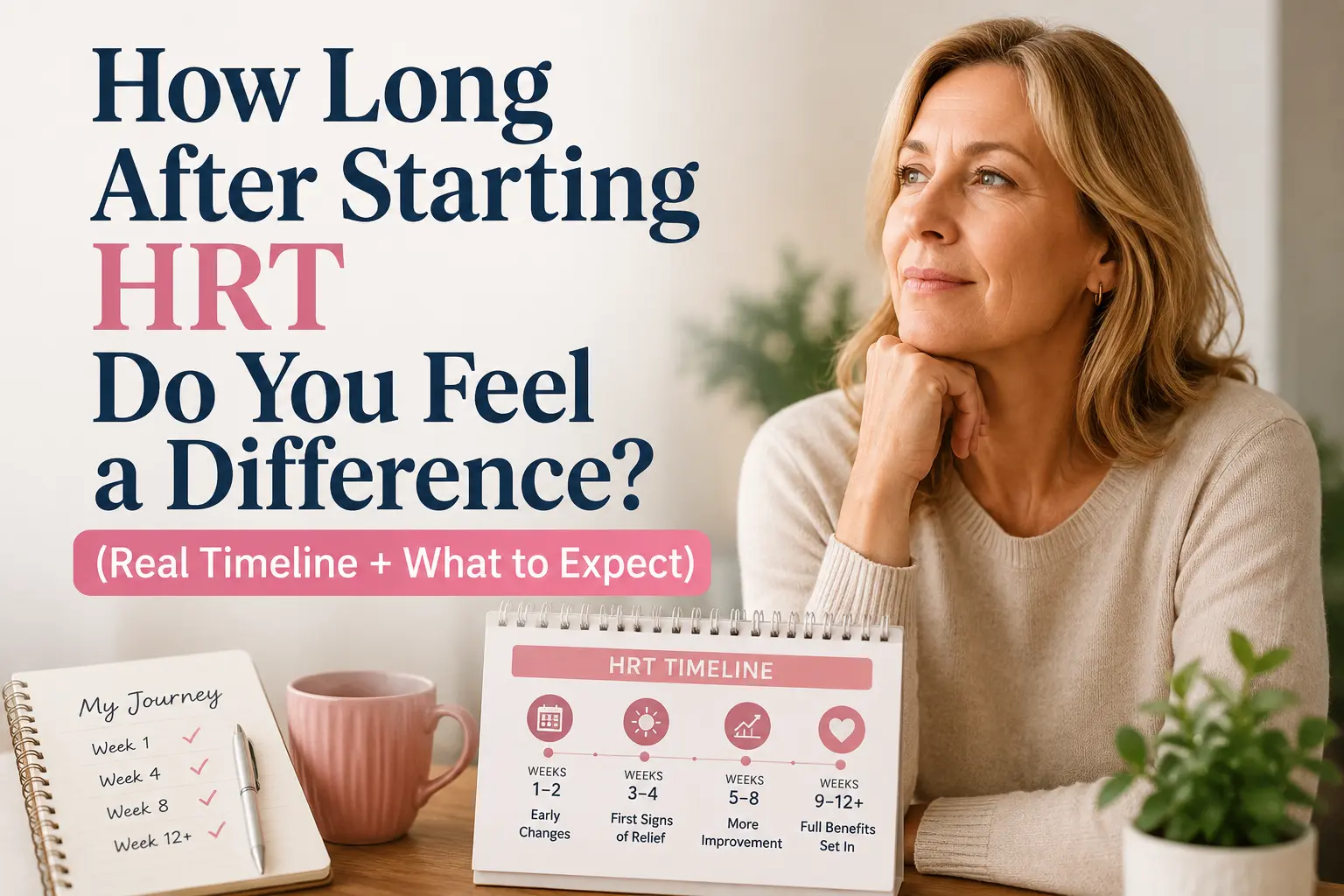
How long does it take to feel better on hormone therapy?
Many women notice improvement within a few weeks, though it can take longer for some symptoms to fully resolve. You can read more about how long it takes to feel a difference on HRT based on which symptoms you’re treating.
Can low estrogen symptoms come and go?
Yes, especially during perimenopause, when hormone levels fluctuate rather than decline in a straight line. This is also true near the end of the transition, when signs perimenopause is ending can look similar to symptoms flaring back up.

Not Sure Where to Start?
Lorem ipsum dolor sit amet consectetur. Et ultrices nunc donec placerat. In velit mattis ac arcu vitae tortor ullamcorper.