Learn More About Blogs

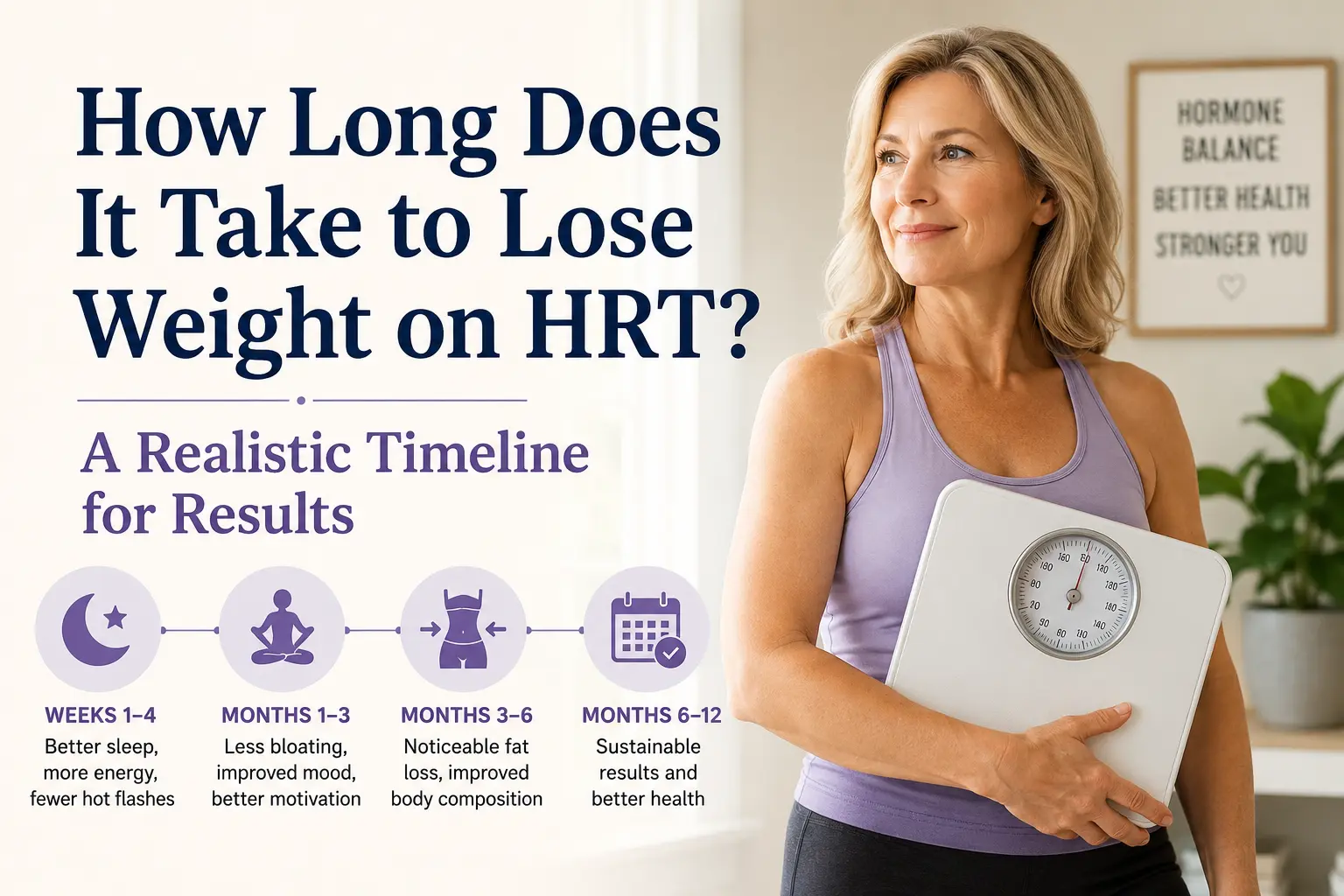
A woman in midlife stands confidently in a bright wellness setting, looking at a weight-loss progress chart while holding a measuring tape. A subtle timeline graphic illustrates milestones over several months, representing the gradual effects of hormone replacement therapy on weight management. The image includes the overlaid text: “How Long Does It Take to Lose Weight on HRT? A Realistic Timeline for Results.”

Many women start hormone replacement therapy (HRT) hoping it will help them feel better, improve menopause symptoms, and make it easier to lose weight.

If you’ve recently started treatment or are considering it, one of the most common questions is: How long does it take to lose weight on HRT?

The answer varies from person to person, but most women who experience weight-loss benefits from HRT begin noticing meaningful changes within three to six months.

Improvements in sleep, energy, mood, and exercise performance often happen much sooner and may help support healthy weight loss over time.

While HRT is not a weight-loss medication, it can help address hormonal imbalances that contribute to weight gain, slower metabolism, increased belly fat, and difficulty maintaining a healthy weight during perimenopause and menopause.


SEE HOW HRT CAN HELP YOU MANAGE YOUR WEIGHT


Quick Answer: How Long Does It Take to Lose Weight on HRT?

Most women who lose weight on HRT begin seeing noticeable improvements within three to six months of starting treatment.

However, positive changes that support weight loss, such as better sleep, increased energy, reduced cravings, and improved exercise recovery, often occur within the first few weeks.

HRT does not directly cause weight loss.

Instead, it helps correct hormone imbalances that may be making weight management more difficult.

Key Takeaways

  • Most women notice meaningful weight-loss or body composition changes within 3 to 6 months of HRT.
  • Improvements in sleep, mood, energy, and metabolism often occur within the first few weeks.
  • HRT is not a weight-loss medication, but it may help address factors that contribute to weight gain.
  • Some women experience temporary bloating or water retention when first starting treatment.
  • HRT may help reduce menopause-related belly fat when combined with healthy lifestyle habits.
  • Nutrition, exercise, sleep, and stress management remain essential for long-term success.


HRT Weight Loss Timeline: What to Expect

Everyone responds differently to hormone therapy, but many women follow a similar timeline.

Timeline What You May Notice
Weeks 1-4 Better sleep, improved mood, fewer hot flashes, increased energy
Months 1-3 Reduced bloating, improved motivation, better workout recovery
Months 3-6 Noticeable changes in body composition, fat loss, and waist measurements
Months 6-12 Greater long-term weight management and improved metabolic health

It’s important to remember that weight loss often happens gradually.

Many women notice their clothes fitting differently before they see major changes on the scale.


Why Is It Harder to Lose Weight During Menopause?

Many women notice weight gain beginning in their 40s and 50s, even if they haven’t changed their eating or exercise habits.

Several hormonal changes can contribute to this:

  • Declining estrogen levels
  • Loss of lean muscle mass
  • Reduced metabolic rate
  • Increased insulin resistance
  • Changes in appetite regulation
  • Poor sleep caused by hot flashes and night sweats
  • Increased stress and cortisol production

These changes can create the perfect environment for weight gain, particularly around the abdomen.

As a result, many women find themselves asking why they suddenly can’t lose weight the way they could in their 20s and 30s.


Does HRT Help With Weight Loss?

HRT is not intended to be a weight-loss treatment.

However, many women find that weight loss becomes easier after starting hormone replacement therapy because it addresses symptoms and hormonal changes that may interfere with healthy weight management.

Potential benefits include:

  • Improved sleep quality
  • Increased energy
  • Better insulin sensitivity
  • Reduced fatigue
  • Improved mood
  • Better exercise performance
  • Preservation of lean muscle mass

When these factors improve, many women find it easier to maintain healthy habits that support gradual and sustainable weight loss.


Does HRT Increase Metabolism?

One of the most common questions women ask is whether HRT boosts metabolism.

The answer is somewhat complex.

HRT does not dramatically increase metabolism in the way some people expect.

However, maintaining healthy hormone levels may help support metabolic function by:

  • Preserving muscle mass
  • Improving insulin sensitivity
  • Supporting physical activity levels
  • Improving sleep quality
  • Reducing fatigue

Since muscle burns more calories than fat, maintaining muscle mass during menopause can play an important role in preventing further metabolic slowdown.

For many women, the benefit is not that HRT speeds up metabolism but that it helps reduce some of the hormonal factors that contribute to a slower metabolism.


Can HRT Help Reduce Belly Fat?

Belly fat is one of the most frustrating symptoms associated with menopause.

Studies show as estrogen levels decline, the body tends to store more fat around the abdomen rather than the hips and thighs.

This shift in fat distribution explains why many women notice an expanding waistline despite maintaining the same weight.

While HRT cannot target belly fat specifically, it may help:

  • Improve fat distribution
  • Reduce abdominal fat accumulation
  • Lower bloating
  • Improve body composition
  • Support healthier metabolic function

When combined with strength training, proper nutrition, and regular physical activity, many women find it easier to reduce stubborn abdominal fat after beginning treatment.


How Much Weight Can You Lose on HRT?

There is no universal amount of weight that women lose on HRT.

Some women lose very little weight but experience significant improvements in body composition.

Others may lose 5 to 15 pounds or more over several months when combining hormone therapy with healthy lifestyle changes.

The amount of weight loss depends on factors such as:

  • Starting weight
  • Hormone levels
  • Nutrition habits
  • Physical activity
  • Sleep quality
  • Stress levels
  • Medical conditions

Rather than focusing solely on the scale, it’s often more helpful to evaluate:

  • Waist circumference
  • Body measurements
  • Body fat percentage
  • Energy levels
  • Strength improvements
  • How clothes fit

These indicators frequently provide a better picture of progress than weight alone.


Why Weight Loss on HRT Isn’t Always Reflected on the Scale

One of the biggest mistakes women make is judging their progress entirely by scale weight.

Hormone replacement therapy may help preserve lean muscle mass while reducing body fat.

Since muscle weighs more than fat by volume, body composition can improve significantly even if scale weight changes very little.

This is why some women notice:

  • Smaller waistlines
  • Better muscle definition
  • Improved fitness
  • Looser clothing

Before they see major weight-loss numbers.

In many cases, fat loss is occurring even when the scale appears unchanged.


Why Some Women Lose Weight Faster on HRT Than Others

Every woman’s experience with HRT is different.

Several factors influence how quickly results occur.

Starting Hormone Levels

Women with significant hormonal deficiencies often notice larger improvements after beginning treatment.

Nutrition

Hormone therapy cannot compensate for poor dietary habits.

Nutrition remains one of the biggest drivers of weight loss.

Physical Activity

Women who strength train regularly often experience better body composition outcomes.

Sleep

Sleep directly affects appetite hormones, insulin sensitivity, and recovery.

Stress

Chronic stress may increase cortisol levels and promote fat storage, especially around the midsection.

Existing Health Conditions

Thyroid disorders, insulin resistance, and other metabolic conditions can influence results.


Can HRT Cause Weight Gain at First?

Some women notice temporary weight gain shortly after starting hormone therapy.

In most cases, this is caused by:

  • Water retention
  • Temporary bloating
  • Fluid shifts as hormones stabilize

This does not necessarily indicate fat gain.

These effects often improve within the first few weeks or months as the body adjusts to treatment.


Signs HRT Is Working Before You Lose Weight

Weight loss is often not the first sign that HRT is working.

Many women notice improvements in other symptoms before seeing changes in body weight.

Positive signs HRT is working include:

  • Better sleep
  • More energy
  • Improved mood
  • Fewer hot flashes
  • Reduced night sweats
  • Better focus
  • Improved libido
  • Better workout recovery
  • Less joint discomfort

These changes often make healthy lifestyle habits easier to maintain, which can eventually lead to weight loss.


Why Am I Not Losing Weight on HRT?

If you’ve been on HRT for several months and haven’t lost weight, it doesn’t necessarily mean treatment isn’t working.

Several factors may be preventing progress.

Common reasons include:

  • Insulin resistance
  • Thyroid dysfunction
  • Poor sleep quality
  • Chronic stress
  • Lack of strength training
  • Excess calorie intake
  • Inadequate protein consumption
  • Certain medications
  • Hormone levels that still require adjustment

This is one reason ongoing follow-up appointments are important. 

Your provider can evaluate whether additional testing or treatment adjustments may be necessary.


How to Maximize Weight Loss While on HRT

The best results occur when hormone therapy is combined with healthy lifestyle habits.

Prioritize Protein

Protein helps preserve muscle mass and supports metabolism.

Strength Train Two to Four Times Per Week

Resistance training helps combat age-related muscle loss and supports long-term fat loss.

Walk Daily

Regular movement throughout the day can significantly increase calorie expenditure.

Improve Sleep Quality

Aim for seven to nine hours of sleep whenever possible.

Manage Stress

Stress management techniques such as meditation, yoga, deep breathing, and walking may help support hormonal balance.

Stay Consistent

Hormonal changes take time.

Consistency is often more important than perfection.


When Should You Talk to Your Provider?

Schedule a follow-up if:

  • Symptoms haven’t improved after several months
  • Weight continues increasing despite healthy habits
  • Side effects become bothersome
  • You suspect your hormone levels need adjustment
  • You have concerns about your progress

Hormone replacement therapy should always be personalized, and treatment plans sometimes require fine-tuning to achieve the best outcomes.


CONTACT US


Final Thoughts: How Long Does It Take to Lose Weight on HRT

So, how long does it take to lose weight on HRT?

For most women, noticeable improvements in weight management and body composition occur within three to six months.

However, the benefits that support weight loss, including better sleep, increased energy, improved mood, and enhanced exercise recovery—often begin much sooner.

HRT isn’t a weight-loss medication, but it may help remove some of the hormonal obstacles that make losing weight more difficult during perimenopause and menopause.

When combined with proper nutrition, regular exercise, quality sleep, and ongoing medical guidance, hormone replacement therapy can be a valuable tool for supporting long-term health and sustainable weight management.


SCHEDULE A CONSULTATION


FAQs: How Long Does It Take to Lose Weight on HRT

How long after starting HRT do you start to lose weight?

Most women who experience weight-loss benefits from HRT begin noticing changes within three to six months. However, improvements in sleep, energy, mood, and exercise recovery often occur within the first few weeks and can help support healthy weight loss over time.

Will I lose belly fat with HRT?

HRT may help reduce menopause-related belly fat by addressing hormonal changes that contribute to abdominal fat storage. While HRT does not specifically target belly fat, many women notice improvements in waist circumference and body composition when hormone therapy is combined with a healthy diet and regular exercise.

How much weight can you lose on HRT?

There is no set amount of weight that women lose on HRT. Some women lose only a few pounds, while others lose 10 pounds or more over several months. Results depend on factors such as hormone levels, nutrition, activity level, sleep quality, stress management, and overall health.

What are the first signs that HRT is working?

The first signs that HRT is working often include better sleep, increased energy, improved mood, fewer hot flashes, reduced night sweats, and improved mental clarity. These benefits may appear within a few weeks, often before noticeable weight loss occurs.

Can HRT make it more difficult to lose weight?

For most women, HRT does not make it harder to lose weight. In fact, hormone therapy may help address factors that contribute to weight gain, such as poor sleep, fatigue, reduced muscle mass, and hormonal imbalances. However, HRT alone does not guarantee weight loss and should be combined with healthy lifestyle habits.

What diet is best while taking HRT?

The best diet while taking HRT is one that supports overall health and stable blood sugar levels. Many healthcare providers recommend focusing on lean protein, vegetables, fruits, healthy fats, whole grains, and high-fiber foods while limiting highly processed foods and excess added sugars.

What kind of HRT is best for weight?

There is no single type of HRT that is considered best for weight loss. The most effective treatment depends on your symptoms, hormone levels, medical history, and individual needs. A healthcare provider can help determine the most appropriate hormone therapy plan based on your specific situation and health goals.


Middle-aged woman sitting thoughtfully at home beside text reading "What Are the Signs You Need Hormone Replacement Therapy?" with icons representing common symptoms including hot flashes, poor sleep, brain fog, mood swings, and low libido.

If you’ve been dealing with hot flashes, poor sleep, mood swings, brain fog, or unexplained weight gain, you may be wondering whether your hormones are to blame.

For many women, these symptoms begin during perimenopause and menopause as estrogen and progesterone levels naturally decline.

While some hormonal changes are a normal part of aging, symptoms that interfere with your daily life don’t have to be.

Hormone replacement therapy (HRT) may help relieve many of the symptoms associated with hormone imbalances and menopause, allowing you to feel more like yourself again.

But how do you know if you’re a candidate for hormone therapy?

What are the signs you need hormone replacement therapy?

Let’s take a closer look.


SEE IF HRT IS RIGHT FOR YOU


Quick Answer: What Are the Signs You Need Hormone Replacement Therapy?

The most common signs you may need hormone replacement therapy include:

Sign Possible Hormonal Cause
Hot flashes Declining estrogen levels
Night sweats Hormonal fluctuations
Sleep problems Changes in estrogen and progesterone
Mood swings Hormone imbalances affecting neurotransmitters
Brain fog Fluctuating hormone levels
Vaginal dryness Lower estrogen production
Low libido Reduced estrogen and testosterone
Fatigue Hormonal changes and poor sleep
Weight gain Slower metabolism and hormone shifts
Joint pain Reduced estrogen affecting inflammation
Hair thinning Hormonal changes affecting hair growth
Frequent UTIs Changes in vaginal and urinary tissues

If these symptoms are frequent, persistent, or affecting your quality of life, it may be time to discuss hormone replacement therapy with a healthcare provider.


Understanding Hormonal Changes During Perimenopause and Menopause

Before discussing the signs you need HRT, it helps to understand what’s happening inside your body.

Perimenopause is the transitional stage leading up to menopause.

It often begins in a woman’s 40s, although some women experience symptoms earlier.

During this time, estrogen and progesterone levels fluctuate unpredictably.

Eventually, menopause occurs when you’ve gone 12 consecutive months without a menstrual period.

At that point, hormone production continues to decline, which can lead to a wide range of symptoms.

Because estrogen affects nearly every system in the body, including the brain, heart, bones, muscles, skin, and reproductive organs, a hormonal imbalance can show up in many different ways.


Symptoms of Low Estrogen

Many women searching for signs they need hormone replacement therapy are actually experiencing symptoms of low estrogen.

Low estrogen levels may cause:

  • Hot flashes
  • Night sweats
  • Irregular periods
  • Brain fog
  • Mood swings
  • Anxiety
  • Vaginal dryness
  • Pain during intercourse
  • Low libido
  • Sleep disturbances
  • Fatigue
  • Joint pain
  • Hair thinning
  • Weight gain

While these symptoms can have other causes, declining estrogen is one of the most common reasons women seek hormone therapy during perimenopause and menopause.


12 Signs You May Need Hormone Replacement Therapy


Let’s look at some of the signs you need hormone replacement therapy?

1. Hot Flashes

Hot flashes are one of the most recognizable symptoms of menopause.

You may suddenly experience intense warmth in your face, neck, or chest, followed by sweating and chills.

Some women experience occasional hot flashes, while others have multiple episodes every day.

If hot flashes are disrupting your work, sleep, or daily activities, hormone replacement therapy may help provide relief.

2. Night Sweats

Night sweats are essentially hot flashes that occur during sleep.

Many women wake up drenched in sweat, needing to change clothes or bedding.

Over time, repeated sleep disruptions can contribute to fatigue, mood changes, and difficulty concentrating.

Studies show frequent night sweats are often one of the clearest signs that declining estrogen levels may be affecting your quality of life.

3. Difficulty Sleeping

Many women entering perimenopause discover that getting a good night’s sleep becomes increasingly difficult.

You may find yourself waking up multiple times during the night, struggling to fall asleep, waking earlier than usual, or feeling exhausted despite spending enough time in bed.

Sleep disturbances are often linked to hormonal fluctuations and can significantly affect overall health and well-being.

4. Mood Swings, Anxiety, or Irritability

Hormones influence neurotransmitters that help regulate mood, including serotonin and dopamine.

When hormone levels fluctuate, you may experience irritability, anxiety, increased emotional sensitivity, mood swings, or difficulty managing stress.

Many women report feeling emotionally different during perimenopause and menopause, even if they have never struggled with mood-related symptoms before.

5. Brain Fog and Memory Problems

Brain fog is one of the most common yet least discussed symptoms of hormonal changes.

Women often notice:

  • Difficulty concentrating
  • Forgetfulness
  • Mental fatigue
  • Reduced focus
  • Trouble multitasking

These symptoms can affect both personal and professional life and may become increasingly frustrating over time.

6. Vaginal Dryness and Pain During Intimacy

Estrogen helps maintain healthy vaginal tissues and natural lubrication.

As estrogen levels decline, some women experience vaginal dryness, burning, itching, irritation, or pain during intercourse.

These symptoms can affect both comfort and intimacy.

7. Low Libido

Changes in estrogen and testosterone levels can contribute to a decreased interest in sex.

Low libido may be accompanied by reduced sexual desire, difficulty becoming aroused, less satisfaction during intimacy, or changes in sexual responsiveness.

8. Persistent Fatigue

Hormonal changes can contribute to low energy, reduced motivation, daytime sleepiness, and slower recovery from physical activity.

When combined with poor sleep, hormone-related fatigue can significantly affect daily functioning.

9. Unexplained Weight Gain

Many women notice changes in their weight during perimenopause and menopause.

You may find that weight gain occurs despite maintaining your usual habits, fat accumulates around the abdomen, and losing weight becomes more difficult than it once was.

10. Joint Pain and Muscle Aches

Estrogen plays an important role in reducing inflammation and supporting joint health.

When levels decline, some women experience joint stiffness, aching muscles, increased soreness, and reduced mobility.

11. Hair Thinning and Changes in Skin Health

Hormonal fluctuations can affect collagen production, skin hydration, and hair growth.

You may notice thinning hair, increased shedding, dry skin, loss of skin elasticity, and more noticeable fine lines.

12. Frequent Urinary Tract Infections or Bladder Changes

Lower estrogen levels can affect the tissues of the urinary tract and pelvic floor.

Common symptoms include frequent UTIs, increased urinary urgency, mild urinary leakage, bladder irritation, and more frequent nighttime urination.


SEE HOW HRT CAN RELIEVE YOUR SYMPTOMS


How Do You Know If Your Symptoms Are Hormone Related?

Not every symptom is caused by hormonal changes.

However, your symptoms may be related to declining hormone levels if:

  • You’re in your 40s or 50s
  • Your menstrual cycles have become irregular
  • Several symptoms appeared around the same time
  • Symptoms fluctuate throughout the month
  • Lifestyle changes haven’t improved your symptoms
  • Symptoms began during perimenopause or menopause

A healthcare provider can review your symptoms, medical history, and overall health to determine whether hormones may be contributing to what you’re experiencing.


What Happens During a Hormone Evaluation?

Many women wonder what happens when they seek help for possible hormonal imbalances.

A hormone evaluation may include:

  • A review of your symptoms
  • Medical history assessment
  • Discussion of menstrual changes
  • Lifestyle and health review
  • Physical examination when appropriate
  • Laboratory testing when indicated

The goal is to determine whether hormonal changes are contributing to your symptoms and whether hormone replacement therapy may be an appropriate treatment option.


Signs You May Need Hormone Replacement Therapy in Your 40s

Many women assume hormone therapy is only for women who have already reached menopause.

In reality, symptoms often begin years earlier during perimenopause.

Women in their 40s commonly experience irregular periods, mood changes, sleep disturbances, brain fog, fatigue, and early hot flashes.


Signs You May Need Hormone Replacement Therapy in Your 50s

During your 50s, hormone levels typically continue to decline.

Symptoms may become more noticeable and include frequent hot flashes, night sweats, weight gain, vaginal dryness, joint discomfort, and reduced libido.


When Should You Consider Hormone Replacement Therapy?

A good question to ask yourself is not whether you have symptoms, but whether those symptoms are interfering with your life.

You may want to consider hormone therapy if:

  • You’re losing sleep regularly
  • Symptoms affect your work performance
  • Mood changes strain relationships
  • Low energy prevents you from doing activities you enjoy
  • Intimacy has become uncomfortable
  • You no longer feel like yourself


Who Is a Good Candidate for HRT?

Many healthy women experiencing moderate to severe menopause symptoms may be candidates for hormone replacement therapy.

Factors that may influence candidacy include:

  • Age
  • Medical history
  • Family history
  • Current symptoms
  • Menopause status
  • Personal health goals

Because every woman is different, treatment should always be individualized.


How Hormone Replacement Therapy May Help

When appropriate, HRT may help reduce or improve:

  • Hot flashes
  • Night sweats
  • Sleep problems
  • Mood changes
  • Anxiety
  • Brain fog
  • Low libido
  • Vaginal dryness
  • Fatigue
  • Joint discomfort

Many women report significant improvements in both physical symptoms and overall well-being after beginning treatment under medical supervision.


How Amari Health Can Help

At Amari Health, we understand that hormonal symptoms can affect every area of your life.

Whether you’re dealing with fatigue, weight gain, brain fog, low libido, poor sleep, hot flashes, or mood changes, our team takes a personalized approach to hormone replacement therapy.

We don’t believe in one-size-fits-all treatment.

Instead, we take the time to understand your symptoms, evaluate your health history, assess your hormone levels, and create an individualized treatment plan designed around your needs and goals.

Our goal is to help you restore balance, improve your quality of life, and feel your best during perimenopause, menopause, and beyond.


CONTACT US


Final Thoughts: What Are the Signs You Need Hormone Replacement Therapy

The signs you need hormone replacement therapy often extend far beyond hot flashes.

Symptoms such as poor sleep, fatigue, brain fog, low libido, mood changes, weight gain, joint pain, and vaginal dryness may all be linked to declining hormone levels.

While hormonal changes are a natural part of aging, symptoms that interfere with your daily life shouldn’t be ignored.

Understanding the connection between your symptoms and your hormones can help you make informed decisions about your health and determine whether hormone replacement therapy may be right for you.

If you’re experiencing symptoms of hormonal imbalance and want answers, speaking with a qualified healthcare provider can help you explore your options and create a plan tailored to your needs.


SCHEDULE A CONSULTATION


FAQs: What Are the Signs You Need Hormone Replacement Therapy

How do I know if I really need HRT?

You may want to consider HRT if symptoms such as hot flashes, night sweats, poor sleep, brain fog, mood changes, low libido, or vaginal dryness are affecting your quality of life. A healthcare provider can evaluate your symptoms, medical history, and hormone levels to determine whether hormone replacement therapy may be appropriate for you.

What are the 5 common signs of hormonal imbalance?

Five of the most common signs of hormonal imbalance in women include fatigue, mood swings, weight gain, irregular menstrual cycles, and trouble sleeping. Other symptoms may include hot flashes, low libido, brain fog, and changes in skin or hair health.

What are the symptoms of low progesterone and estrogen?

Low progesterone and estrogen can cause symptoms such as irregular periods, hot flashes, night sweats, mood swings, anxiety, sleep problems, fatigue, low libido, vaginal dryness, and difficulty concentrating. These symptoms are common during the transition into menopause.

How do you feel if your hormones are off?

Many women describe feeling tired, irritable, emotionally sensitive, anxious, or mentally foggy when their hormones are out of balance. You may also experience sleep disturbances, weight gain, low energy, reduced motivation, or changes in sexual health.

How long does it take to fix hormone imbalance?

The timeline varies depending on the underlying cause and treatment approach. Some women notice improvements in symptoms within a few weeks of starting treatment, while others may require several months to achieve optimal hormone balance. Consistent follow-up and individualized care are important for long-term success.

How long after starting HRT do you feel a difference?

The timeline varies from person to person, but many women begin noticing improvements in symptoms such as hot flashes, night sweats, and sleep quality within a few weeks of starting HRT. Other benefits, including improvements in mood, energy levels, libido, and overall well-being, may take several weeks to a few months to become noticeable. Your response will depend on factors such as your hormone levels, treatment plan, and overall health.

How do I know if I need a higher dose of HRT?

If you’ve been taking HRT consistently and are still experiencing symptoms such as hot flashes, night sweats, mood swings, fatigue, brain fog, or vaginal dryness, your current dose may not be fully addressing your needs. However, persistent symptoms don’t automatically mean you need a higher dose. A healthcare provider can evaluate your symptoms, review your treatment plan, and determine whether adjustments are necessary to help you achieve better symptom relief while maintaining safety.

A middle-aged woman sits thoughtfully at a table while reviewing hormone therapy information, with overlaid text reading "How Do I Know If I Need a Higher Dose of HRT?" in a clean, professional healthcare setting.

If you’ve started hormone replacement therapy and you’re still dealing with hot flashes, poor sleep, brain fog, fatigue, or other menopause symptoms, you may be wondering whether your dose is high enough.

This is one of the most common questions people ask after starting HRT.

While hormone therapy can be highly effective, finding the right dose isn’t always immediate.

Some people notice improvements within a few weeks, while others require adjustments before achieving the symptom relief they’re hoping for.

So how do you know if your HRT dose is too low?

The answer often comes down to which symptoms are still present, how long you’ve been on treatment, and whether those symptoms have improved, stayed the same, or returned after initially getting better.


SEE IF HRT IS RIGHT FOR YOU


Quick Answer: Signs Your HRT Dose May Be Too Low

You may need a higher dose of HRT if you’ve been taking hormone therapy consistently and continue experiencing symptoms such as hot flashes, night sweats, brain fog, fatigue, low libido, mood changes, sleep problems, vaginal dryness, or joint pain.

However, HRT takes time to work, and not every persistent symptom means your dose needs to be increased.

A healthcare provider can help determine whether your symptoms are related to hormone levels or another underlying cause.


How Long Does HRT Take to Work?

One of the biggest reasons people question whether they need a higher dose of HRT is because they expected results sooner.

While some women notice improvements fairly quickly, hormone therapy is often a gradual process.

Many healthcare providers recommend allowing enough time for HRT to take effect before making dosage changes.


What Symptoms Usually Improve First on HRT?

Understanding what typically improves first can help you determine whether your treatment is working.

Many women notice improvements in:

  • Hot flashes
  • Night sweats
  • Sleep quality
  • Mood stability

Symptoms such as brain fog, fatigue, libido changes, and vaginal dryness sometimes take longer to improve.

If your hot flashes have improved but your energy levels haven’t, that doesn’t necessarily mean your HRT isn’t working.

It may simply mean your body needs more time to respond.


Common Signs You May Need a Higher Dose of HRT

Let’s look at some of the common signs your HRT does may be to low:

Hot Flashes and Night Sweats Continue

Persistent hot flashes and night sweats are often among the clearest signs that menopause symptoms are not yet fully controlled.

Occasional breakthrough symptoms can happen, but if you’re still experiencing frequent episodes after several weeks or months of treatment, it may be worth discussing whether your dose should be reviewed.

Why Am I Still Getting Hot Flashes on HRT?

This is one of the most common questions women ask after starting treatment.

Possible reasons include:

  • Your current dose may be too low
  • You haven’t been on treatment long enough
  • You’re still in perimenopause and hormone levels are fluctuating
  • Stress is worsening symptoms
  • Another medical condition may be contributing

A healthcare provider can help determine which factor is most likely affecting you.

Brain Fog Persists

Many women report that brain fog is one of the most frustrating menopause symptoms.

You may notice:

  • Forgetfulness
  • Difficulty concentrating
  • Trouble finding words
  • Feeling mentally slower than usual

If these symptoms continue despite treatment, it may be appropriate to reassess your treatment plan.

Low Energy and Fatigue Continue

Fatigue can affect nearly every aspect of daily life.

If you’re sleeping adequately but still feel exhausted, hormone levels may be only one part of the picture.

Your provider may also evaluate factors such as stress, thyroid health, nutrition, and sleep quality.

Sleep Problems Continue

Sleep and hormone health are closely connected.

Persistent symptoms such as:

  • Difficulty falling asleep
  • Waking throughout the night
  • Early morning waking
  • Non-restorative sleep

may indicate that your symptoms are not fully controlled.

Mood Changes or Anxiety Remain

Many women begin HRT hoping to improve emotional symptoms.

If you continue experiencing irritability, mood swings, anxiety, or feeling emotionally overwhelmed, it may be time for a follow-up discussion with your provider.

Low Libido Persists

Changes in sexual desire are common during perimenopause and menopause.

If low libido continues despite treatment, your healthcare provider may want to assess whether hormone-related factors are contributing.

Vaginal Dryness and Discomfort Continue

Persistent vaginal symptoms can sometimes indicate that estrogen-related symptoms have not been adequately addressed.

Joint Pain and Muscle Aches Continue

Joint stiffness and body aches are frequently overlooked menopause symptoms.

If discomfort remains despite treatment, it’s worth discussing whether hormone levels or other factors may be contributing.


GET HELP ADJUSTING YOUR TREATMENT


How Do I Know If My Estrogen Dose Is Too Low?

Many women specifically wonder whether they need more estrogen.

Possible signs of low estrogen despite HRT may include:

  • Ongoing hot flashes
  • Night sweats
  • Vaginal dryness
  • Brain fog
  • Mood changes
  • Poor sleep
  • Low libido

However, symptoms alone cannot determine whether your estrogen dose should be increased.

Your provider will consider your symptom pattern, treatment history, and overall health before recommending any changes.


Could Something Other Than HRT Be Causing Your Symptoms?

Not every symptom means your HRT dose is too low.

Other possible causes include:

  • Chronic stress
  • Sleep disorders
  • Thyroid conditions
  • Anxiety
  • Depression
  • Nutritional deficiencies
  • Certain medications
  • Other health conditions

This is why self-adjusting your dose is never recommended.


How Long Should I Wait Before Increasing My HRT Dose?

How long to notice changes on HRT depends on:

  • Your age
  • Whether you’re in perimenopause or postmenopause
  • The type of HRT you’re taking
  • How severe your symptoms are
  • How long you’ve been on treatment

In many cases, healthcare providers prefer to give treatment adequate time to work before making changes.

If symptoms remain bothersome after a reasonable adjustment period, your provider may discuss increasing your dosage.


What If My Symptoms Improved and Then Came Back?

Some women experience symptom relief initially, only to notice symptoms returning later.

This doesn’t necessarily mean your HRT has stopped working.

Possible explanations include:

  • Ongoing hormonal fluctuations
  • Progression through perimenopause
  • Increased stress levels
  • Sleep disruptions
  • Changes in overall health

A follow-up appointment can help determine whether your treatment should be adjusted.


Factors That Can Affect Your HRT Needs

Let’s look at some of the variables that can affect your HRT needs:

Perimenopause

Studies show hormone levels can fluctuate significantly during perimenopause, which may affect how well your current dose controls symptoms.

Postmenopause

Hormone levels become more stable after menopause, but symptom severity and treatment needs still vary from person to person.

Surgical Menopause

Women who experience menopause following surgery often experience more abrupt hormonal changes and may require closer monitoring.

Body Weight and Metabolism

Individual differences in metabolism can affect how hormones are absorbed and utilized.

Stress and Lifestyle Habits

Sleep quality, nutrition, exercise, and stress management can all influence symptom severity and overall well-being.


When Should You Talk to a Healthcare Provider?

Consider contacting your provider if:

  • Symptoms remain bothersome after several weeks or months
  • Symptoms initially improved and then returned
  • New symptoms develop
  • Side effects are interfering with daily life
  • You’re unsure whether your current dose is working


How Amari Health Can Help With HRT

At Amari Health, we understand that hormone therapy isn’t one-size-fits-all.

Every patient experiences menopause differently, which is why finding the right treatment approach often requires ongoing evaluation and personalization.

Our team works closely with patients to assess symptoms, monitor progress, and create individualized plans designed to support long-term health and quality of life.

Whether you’re questioning your current HRT dosage or exploring treatment options for the first time, we’re here to help.


CONTACT US


Final Thoughts: How Do I Know If I Need A Higher Dose of HRT

If you’re wondering how to know if you need a higher dose of HRT, persistent symptoms such as hot flashes, night sweats, brain fog, fatigue, sleep problems, low libido, vaginal dryness, or joint discomfort may be signs that your treatment plan should be reviewed.

At the same time, hormone therapy takes time to work, and many factors beyond hormone levels can affect how you feel.

Working closely with a qualified healthcare provider can help you determine whether your dosage is appropriate and whether adjustments may be beneficial.


SCHEDULE A CONSULTATION


FAQs: How Do I Know If I Need A Higher Dose of HRT

How do I know if my HRT dose is too low?

Signs that your HRT dose may be too low can include ongoing hot flashes, night sweats, brain fog, fatigue, mood changes, sleep problems, low libido, or vaginal dryness. If symptoms continue after giving treatment adequate time to work, speak with your healthcare provider about whether your dosage should be reviewed.

How long should I wait before increasing my HRT dose?

The timeline varies depending on the type of HRT you’re using, your symptoms, and your stage of menopause. Many healthcare providers recommend allowing several weeks for treatment to take effect before considering dosage adjustments. Always consult your provider before making changes to your medication.

Why am I still getting hot flashes on HRT?

Persistent hot flashes can occur for several reasons. Your current dose may not be fully controlling symptoms, you may still be experiencing hormonal fluctuations during perimenopause, or you may not have been on treatment long enough to experience its full effects. A healthcare provider can help determine the cause.

Can HRT stop working over time?

HRT does not typically stop working, but symptom changes can occur due to ongoing hormonal fluctuations, aging, increased stress, changes in health, or progression through menopause. If symptoms return after initially improving, schedule a follow-up appointment with your healthcare provider.

Can stress make HRT seem like it’s not working?

Yes. Chronic stress can contribute to poor sleep, fatigue, anxiety, mood changes, and difficulty concentrating. These symptoms can overlap with menopause symptoms and may make it appear as though HRT is not working as effectively as expected.

Is it normal to still have symptoms after starting HRT?

Yes. Hormone replacement therapy often takes time to produce noticeable improvements. While some women experience relief within a few weeks, others may need several months before seeing the full benefits of treatment.

Does everyone need the same HRT dose?

No. HRT is highly individualized. Factors such as age, stage of menopause, symptom severity, overall health, and personal treatment goals can all influence the dosage that works best for each person.

Middle-aged woman measuring her waist while standing in workout clothes beside text reading “Can HRT Help You Lose Weight? What Women Need to Know About Hormones, Belly Fat, and Menopause.”

If you feel like losing weight became harder almost overnight during perimenopause or menopause, you are not imagining it.

Many women notice stubborn belly fat, slower metabolism, lower energy levels, poor sleep, and changes in body composition during this stage of life.

Even women who eat well and stay active may suddenly struggle with weight gain that feels impossible to reverse.

That is why so many women ask:

Can HRT help you lose weight?

The short answer is that hormone replacement therapy (HRT) may help support weight loss for some women, especially when hormonal changes are making it harder to maintain a healthy weight during menopause.

However, HRT is not considered a traditional weight loss treatment or a quick fix.

Instead, HRT may help improve several underlying factors connected to menopause weight gain, including metabolism, sleep quality, muscle loss, insulin sensitivity, and energy levels.

For many women, that can make healthy weight loss feel more realistic again.


SEE IF HRT CAN HELP YOUR WEIGHT LOSS GOALS


Why Menopause Often Causes Weight Gain


Studies show weight gain during menopause is extremely common, especially around the abdomen.

One of the biggest reasons is declining estrogen levels.

Estrogen affects several processes tied to metabolism, body composition, appetite regulation, and fat storage.

As estrogen drops, the body often begins storing more fat around the midsection instead of the hips and thighs.

At the same time, women naturally lose muscle mass with age.

Since muscle burns more calories than fat, losing lean muscle can slow metabolism and make weight gain easier.

Menopause can also affect lifestyle habits in ways that contribute to weight gain.

Many women experience:

  • Fatigue
  • Poor sleep
  • Increased stress and cortisol
  • Mood changes
  • Lower motivation to exercise
  • Insulin resistance
  • Increased cravings
  • Reduced recovery from workouts

These hormonal and metabolic changes are a major reason why many women feel like their normal diet and exercise routines stop working during menopause.


Can HRT Actually Help You Lose Weight?


HRT may help support weight management indirectly by improving symptoms and hormonal imbalances that can make weight loss more difficult.

For example, women who sleep better, feel more energized, and experience fewer menopause symptoms may find it easier to:

  • Exercise consistently
  • Build or maintain muscle
  • Recover from workouts
  • Manage cravings
  • Stay physically active throughout the day

Some women also notice improvements in body composition, meaning they may lose inches around the waist or maintain lean muscle more effectively even if the number on the scale changes slowly.

Research has also suggested that hormone replacement therapy may help reduce the accumulation of abdominal fat during menopause in some women.

Still, HRT works best as part of a larger health strategy that includes nutrition, movement, sleep, and stress management.


Does HRT Help With Belly Fat?


Many women specifically look into HRT because of stubborn menopause belly fat.

Lower estrogen levels are associated with increased visceral fat, which is the deeper abdominal fat stored around the organs.

This type of fat is linked to insulin resistance, heart disease, inflammation, and metabolic dysfunction.

HRT may help support healthier fat distribution during menopause by improving hormonal balance and reducing some of the metabolic changes associated with estrogen decline.

Some women report:

  • Less bloating
  • Reduced waist circumference
  • Improved muscle tone
  • Better workout performance
  • Easier weight maintenance

However, HRT is not a guaranteed solution for belly fat.

Factors like stress, sleep quality, diet, activity level, insulin resistance, and genetics still play a major role.


Why Weight Loss Feels Harder During Menopause


Many women become frustrated during menopause because the same habits that worked earlier in life suddenly stop producing results.

This is not simply about getting older.

Hormonal changes can directly affect:

  • Metabolism
  • Muscle maintenance
  • Appetite
  • Blood sugar regulation
  • Fat storage
  • Energy production

As estrogen declines, the body may burn fewer calories at rest and store fat more easily around the abdomen.

Sleep disruption also becomes more common during menopause.

Poor sleep can increase cortisol levels, worsen cravings, reduce recovery from exercise, and contribute to additional weight gain.

For some women, menopause can also increase insulin resistance, which may make fat loss slower and cravings more intense.


How Long Does It Take to Lose Weight on HRT?


HRT does not usually cause rapid weight loss overnight.

Instead, many women notice gradual improvements over time as hormone levels stabilize and menopause symptoms become more manageable.

A general timeline may look something like this:


First Few Weeks


  • Better sleep
  • Reduced hot flashes
  • Improved mood
  • More stable energy levels


2 to 3 Months


  • Better workout consistency
  • Reduced bloating
  • Improved recovery
  • Fewer cravings


3 to 6 Months


  • Changes in body composition
  • Easier weight maintenance
  • Reduced abdominal fat accumulation
  • Improved muscle preservation

Results vary from person to person depending on:

  • Hormone levels
  • Age
  • Type of HRT
  • Nutrition habits
  • Exercise routine
  • Stress levels
  • Existing metabolic health


Why Some Women Gain Weight on HRT


Not every woman loses weight on HRT, and some women may temporarily gain weight after starting treatment.

This may happen because of:

  • Water retention
  • Hormonal adjustments
  • Changes in progesterone levels
  • Increased appetite
  • Reduced activity levels unrelated to HRT

In many cases, early bloating or fluid retention improves as the body adapts to treatment.

It is also important to understand that HRT cannot completely offset factors like chronic stress, lack of sleep, poor nutrition, or a sedentary lifestyle.


What Is the Best HRT for Weight Loss?


There is no single “best” form of HRT for weight loss because treatment should be personalized based on symptoms, hormone levels, medical history, and health goals.

Depending on the individual, treatment may include:

  • Estrogen therapy
  • Progesterone therapy
  • Combination therapy
  • Testosterone support in some cases

Some women respond well to patches or creams, while others prefer oral medications.

The goal of HRT is typically to improve menopause symptoms and support overall health rather than simply produce weight loss.


HRT and Metabolism


Hormones affect much more than reproductive health.

They also play a major role in:

  • Metabolism
  • Appetite regulation
  • Energy production
  • Blood sugar balance
  • Fat storage
  • Muscle maintenance

As hormone levels decline during menopause, metabolism often slows.

This can make it easier to gain weight and harder to lose it even without major lifestyle changes.

HRT may help support metabolic health by improving hormonal balance and helping women preserve lean muscle, maintain energy, and stay physically active.


Can You Combine HRT With Weight Loss Medications?


Some women combine HRT with medical weight loss treatments like GLP-1 medications as part of a medically supervised plan.

GLP-1 medications primarily help with:

  • Appetite control
  • Blood sugar regulation
  • Slower digestion
  • Reduced food cravings

Meanwhile, HRT addresses menopause-related hormonal changes and symptoms.

For women struggling with menopause weight gain, insulin resistance, or metabolic dysfunction, combining both approaches may help support better long-term results in some cases.


What Else Helps With Weight Loss During Menopause?


Even if HRT improves hormone balance, healthy lifestyle habits still matter.

The most effective long-term approach to menopause weight loss often includes:

  • Strength Training: Resistance training helps preserve muscle mass and support metabolism.
  • Higher Protein Intake: Protein can help maintain lean muscle while improving fullness and recovery.
  • Better Sleep: Improving sleep quality may help regulate cortisol, appetite, and energy levels.
  • Stress Management: Chronic stress may contribute to hormonal imbalance and abdominal fat storage.
  • Daily Movement: Walking, resistance training, and regular movement all support metabolic health.
  • Blood Sugar Support: Stabilizing blood sugar may help reduce cravings and energy crashes.


Who May Benefit From HRT?


HRT may be appropriate for women experiencing symptoms related to perimenopause or menopause, including:

  • Hot flashes
  • Night sweats
  • Brain fog
  • Fatigue
  • Mood changes
  • Poor sleep
  • Low sex drive
  • Weight changes

A healthcare provider can evaluate hormone levels, symptoms, medical history, and overall health to determine whether HRT may be appropriate.


SEE IF HRT IS RIGHT FOR YOU


Final Thoughts on HRT and Weight Loss


So, can HRT help you lose weight?

For many women, the answer is yes, but usually indirectly.

Hormone replacement therapy may help support weight management by improving hormonal balance, energy levels, sleep quality, metabolism, muscle maintenance, and fat distribution during menopause.

While HRT is not designed to be a standalone weight loss treatment, many women find that once their hormones are better balanced, healthy habits become easier to maintain and stubborn menopause weight gain becomes more manageable.

If menopause symptoms and weight changes are affecting your quality of life, speaking with a provider experienced in hormone health may help you determine whether HRT could be part of a personalized treatment plan.


SCHEDULE A CONSULTATION


FAQs: Can HRT Help You Lose Weight


What is the best HRT to lose weight?


There is no single best HRT for weight loss because every woman’s hormone levels, symptoms, and health history are different. Some women respond well to estrogen patches, while others may benefit from combination therapy that includes progesterone or testosterone support. The best approach is a personalized treatment plan designed around your symptoms, metabolism, and overall health goals.


Can HRT help you lose belly fat?


HRT may help reduce menopause-related belly fat for some women by improving hormonal balance and supporting healthier fat distribution. Lower estrogen levels are linked to increased abdominal fat storage during menopause, and hormone therapy may help reduce some of those changes when combined with healthy eating, strength training, sleep, and stress management.


How long does it take for HRT to help lose weight?


Most women do not see immediate weight loss from HRT. Some symptoms like poor sleep, fatigue, and hot flashes may improve within a few weeks, while changes in body composition and weight management can take several months. Many women notice gradual improvements within 3 to 6 months when HRT is combined with healthy lifestyle habits.


Can I take semaglutide with HRT?


Some women take semaglutide and HRT together under medical supervision. These treatments work differently. HRT helps address hormonal changes related to menopause, while semaglutide primarily supports appetite control and blood sugar regulation. Combining both may help support weight loss and metabolic health for some women, but treatment should always be guided by a healthcare provider.


Which is better for weight loss, estrogen or progesterone?


Estrogen generally has a stronger connection to metabolism, fat distribution, and menopause-related weight gain. Progesterone still plays an important role in hormonal balance, sleep, and mood, but estrogen is usually more closely associated with body composition and belly fat changes during menopause.


Is it easier to lose weight on or off HRT?


For some women, losing weight may feel easier on HRT because symptoms like fatigue, poor sleep, mood swings, and low energy improve. When hormone levels are more balanced, many women find it easier to exercise consistently, recover from workouts, manage cravings, and maintain healthy habits.


Why does HRT make you look younger?


HRT may help improve skin hydration, elasticity, sleep quality, and overall energy levels, which can contribute to a more youthful appearance. Hormones like estrogen play a role in collagen production and skin health, so balancing hormone levels during menopause may help reduce some visible signs of aging for certain women.


How long after starting HRT do you feel a difference?


Many women begin noticing some improvements within a few weeks of starting HRT, especially with symptoms like hot flashes, sleep issues, mood changes, and low energy. However, more noticeable changes related to metabolism, body composition, and weight management may take several months. Most women see more consistent results within 3 to 6 months, depending on their hormone levels, lifestyle habits, and overall health.

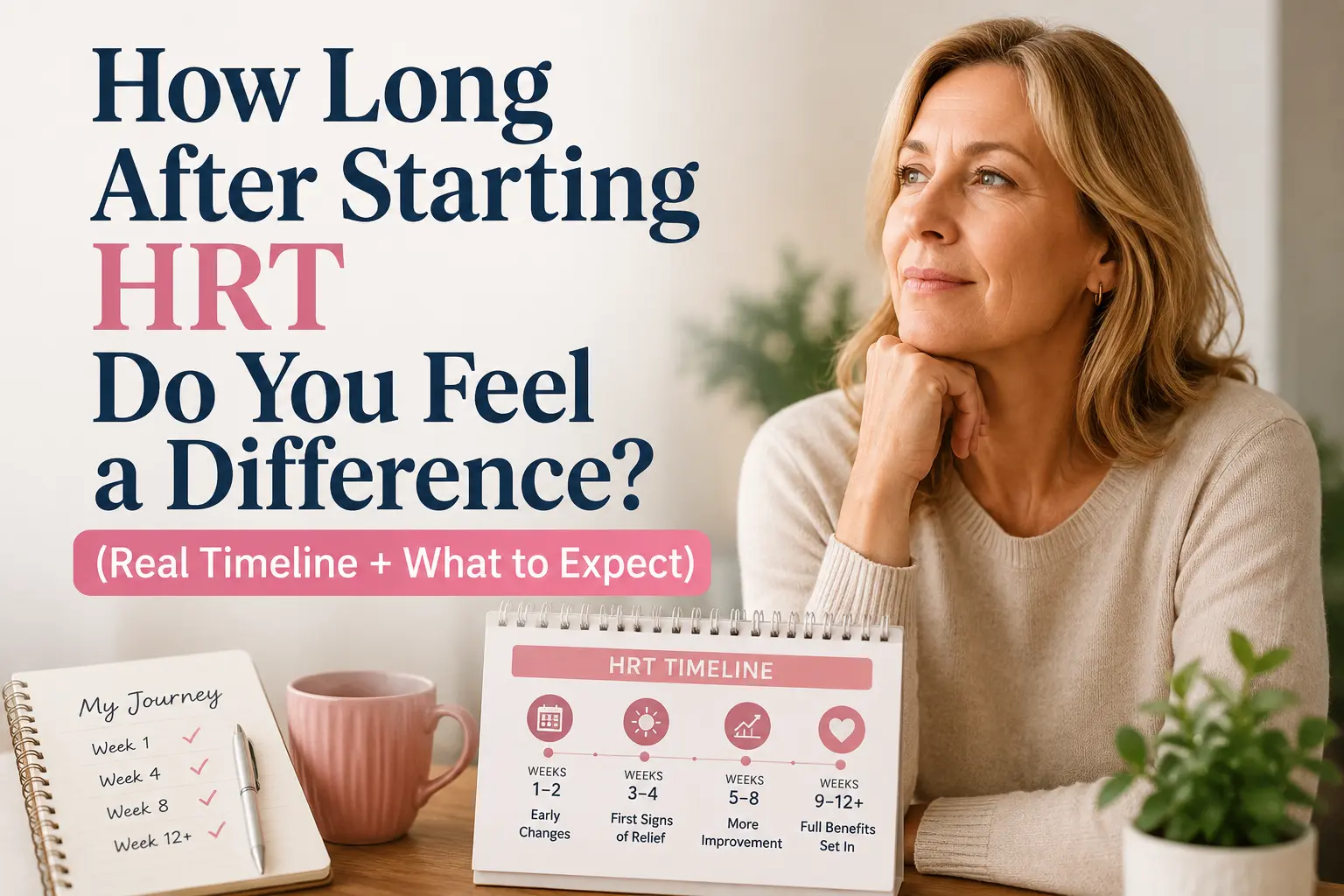
Horizontal featured image of a calm, confident middle-aged woman in soft natural light with a clean background, overlaid text reading “How Long After Starting HRT Do You Feel a Difference? (Real Timeline + What to Expect)”.

Starting hormone replacement therapy (HRT) is a big step and one of the first questions most people have is:

“When will I actually feel better?”

Here’s the honest, straightforward answer:

Most people notice some changes within 2–4 weeks, but it usually takes 8–12 weeks to feel the full benefits.

That said, HRT doesn’t flip a switch overnight.

Some symptoms improve quickly, others take longer, and your experience depends on your body, your hormone levels, and your treatment plan.

Let’s break it down so you know exactly what to expect.


SEE HOW HRT CAN HELP YOU!


How Long Does HRT Take to Work?


HRT works by gradually restoring hormone levels, not instantly correcting them.

A realistic timeline looks like this:

  • Early changes: 2–4 weeks
  • Noticeable improvement: 4–8 weeks
  • Full results: 8–12 weeks (sometimes longer)

If you don’t feel much in the first couple of weeks, that’s normal. 

Your body is still adjusting.


HRT Timeline: Week-by-Week


Let’s take a look at a typical HRT timeline across the weeks after starting:


Weeks 1–2: Subtle Early Changes


This phase is often quiet.

You might notice:

  • Slightly better sleep
  • A small improvement in mood
  • Less intense hot flashes (for some)

Or you may not notice anything yet, and that’s completely normal.


Weeks 3–4: First Signs It’s Working


This is when many people start to feel something shifting.

Common changes:

  • Hot flashes and night sweats begin to decrease
  • Sleep becomes more consistent
  • Mood feels a bit more stable

This is often the point where people think, “Okay, this might be working.”


Weeks 5–8: More Consistent Improvement


Changes become easier to notice and more reliable.

You may experience:

  • Fewer temperature swings
  • More steady energy
  • Improved focus and mental clarity
  • Less anxiety or irritability


Weeks 9–12: Real, Noticeable Difference


This is where HRT starts to feel meaningful in everyday life.

You may notice:

  • Stable mood throughout the day
  • Deeper, more restful sleep
  • Increased libido
  • Reduced joint discomfort


3+ Months: Long-Term Benefits Build


Some benefits take longer, but they continue to improve over time.

These include:

  • Ongoing relief from joint pain
  • Skin and hair changes
  • Support for bone health and metabolism


How Long Each Symptom Takes to Improve


Not all symptoms respond at the same pace.

Here’s what most people experience:

  • Hot flashes & night sweats: 2–4 weeks
  • Sleep issues: 2–6 weeks
  • Mood & anxiety: 4–8 weeks
  • Brain fog & focus: 4–8 weeks
  • Libido: 6–12+ weeks
  • Joint pain: 8–12 weeks

If one symptom improves before another, that’s completely normal.

HRT works in stages.


Why Your Timeline May Be Faster or Slower


No two people respond to HRT the same way.

Here’s why your experience may differ:


Your Starting Hormone Levels


If your hormone levels are very low, it can take longer to rebuild and feel the effects.


Type of HRT


Different forms absorb differently:

  • Patches and creams provide steady hormone levels
  • Pills can take longer to stabilize
  • Pellets release hormones gradually over time


Dosage


If your dose is too low, you may not feel much at first.

Adjustments are common and expected.


Your Body’s Absorption


Everyone metabolizes hormones differently, which affects how quickly you feel results.


Lifestyle Factors


Sleep quality, stress levels, diet, and activity all play a role in how your body responds.


Signs Your HRT Is Working


Early improvements are often subtle, but they matter.

Look for:

  • You’re sleeping better than before
  • Hot flashes are less frequent or intense
  • Your mood feels more stable
  • You have more consistent energy

These small changes usually come before bigger, more noticeable results.


Signs Your HRT May Need Adjustment


It’s very common to adjust HRT in the beginning.

You may need a change if:

  • You feel no improvement after 8–12 weeks
  • Your symptoms are getting worse
  • Side effects don’t go away
  • You still feel off or unbalanced

HRT is not one-size-fits-all.

Fine-tuning is part of the process.


What’s Normal (and What’s Not) in the Beginning


Let’s take a look at what is typically common and uncommon when starting


What’s Normal


  • Gradual improvement, not instant results
  • Mild side effects early on (like slight bloating or breast tenderness)
  • Some symptoms improving faster than others


What’s Not Normal


  • No improvement at all after a few months
  • Symptoms becoming significantly worse
  • Side effects that don’t settle over time

If something doesn’t feel right, it’s worth checking in.


What to Expect in the First 3 Months


The first 90 days are all about finding your balance.

During this time:

This period is less about perfection and more about progress.


When to Talk to a Provider


You don’t need to just wait it out if something feels off.

Reach out if:

  • You’re not seeing progress after a couple of months
  • Your symptoms are still affecting your daily life
  • You’re unsure if your experience is normal

Getting the right adjustments can make a big difference.


How Amari Health Helps You Get Better Results


One of the biggest reasons people don’t see results with HRT is lack of personalization.

At Amari Health, the approach focuses on:

  • Understanding your specific hormone levels
  • Matching treatment to your symptoms
  • Adjusting your plan based on how you actually feel

This kind of tailored care helps you move from guessing to real progress.


CONTACT US


The Bottom Line: How Long After Starting HRT Do You Feel a Difference


Most people feel some improvement within 2–4 weeks, with more noticeable results building over 8–12 weeks.

If it feels slow at first, that’s normal.

Hormone therapy works gradually, but with the right approach, those small changes turn into real, lasting improvements.

The key is patience, consistency, and making adjustments when needed.


SCHEDULE A CONSULTATION


FAQ: How Long After Starting HRT Do You Feel a Difference


How soon after starting HRT will I lose weight?


Weight loss isn’t usually immediate with HRT. Some people notice small changes in the first few weeks, especially with reduced bloating or better energy, but studies show meaningful changes in body composition often take a few months. HRT can support metabolism and make it easier to lose weight, but results depend on diet, activity, and overall health.


What does the first week of HRT feel like?


The first week is often subtle. Some people feel slightly calmer or sleep a bit better, while others notice no difference at all. Mild side effects like bloating or breast tenderness can happen early on, but many people don’t feel noticeable changes until a few weeks in.


Do hot flashes get worse when you first start HRT?


Most people find that hot flashes improve with HRT, but in some cases, symptoms may briefly feel the same or slightly more noticeable during the first couple of weeks as the body adjusts. This usually settles as hormone levels stabilize.


What are the first signs of estrogen working?


Early signs often include better sleep, fewer or less intense hot flashes, and a more stable mood. These changes can be subtle at first but are usually the first indicators that estrogen levels are improving.


Does HRT make you tired when you first start it?


Some people feel slightly tired in the beginning as their body adjusts, while others feel more energized. This usually improves within a few weeks. If fatigue continues, it may be a sign that your dose or timing needs to be adjusted.

Watch Our Workshop Video

Fill out the form below to get instant access to our full workshop video. Discover valuable insights and strategies that you can start applying right away!

Name(Required)

Is Bio-Identical HRT Safe for Women?

Concerns around hormone therapy largely stem from the Women’s Health Initiative (WHI) study conducted over two decades ago. However, it’s important to note that the WHI studied synthetic, non-human hormones—specifically horse-derived hormones which were later shown to have harmful effects.

Since then, a growing body of research on bio-identical hormones—which are structurally identical to those naturally produced by the human body—has found no increased risk of chronic disease. These safer, plant-derived hormones have become a trusted, evidence-based option for women seeking to restore balance and relieve symptoms.